
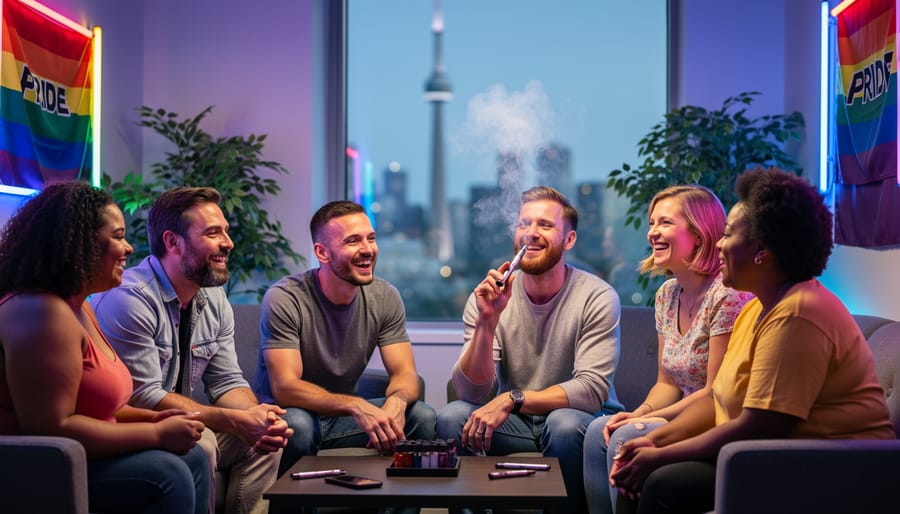
Understand that vaping culture within Canada’s LGBTQ+ communities reflects complex intersections of identity, social bonding, and harm reduction practices that deserve nuanced examination beyond surface-level assumptions. Recognize that queer-friendly vape shops and online retailers where people buy vape juice online have become unexpected community gathering spaces, particularly in cities like Toronto, Vancouver, and Montreal, where shared experiences around product preferences reveal deeper patterns about belonging and self-expression.
Acknowledge that higher vaping rates among LGBTQ+ Canadians—approximately 1.5 times the national average according to recent public health data—stem from multiple factors including targeted marketing, minority stress coping mechanisms, and the historical role of smoking in queer social spaces now transitioning to perceived safer alternatives. Examine how gender-diverse individuals navigate vaping differently than cisgender users, with non-binary and transgender Canadians reporting distinct flavor preferences and device choices that challenge heteronormative marketing assumptions.
Consider that bars, Pride events, and digital communities have transformed how queer Canadians discover and discuss vaping products, creating subcultures around everything from cloud-chasing competitions to discreet nicotine salt devices. Investigate the tension between harm reduction advocates who view vaping as a crucial tool for LGBTQ+ smokers trying to quit and health professionals concerned about youth uptake and long-term effects in already vulnerable populations. This exploration moves beyond statistics to understand why these trends matter for community health, cultural identity, and the evolving landscape of queer Canadian life.
The State of Vaping in Canadian LGBTQ+ Spaces
Vaping has woven itself into the fabric of queer nightlife and social spaces across Canada in ways that reflect both broader cultural shifts and the unique dynamics of LGBTQ+ communities. Walk into most gay bars, clubs, or Pride festivals in major cities like Toronto, Vancouver, or Montreal, and you’ll notice the telltale wisps of flavored vapor mingling with the crowd—a phenomenon that’s become as commonplace as rainbow flags.
The numbers tell an intriguing story. Recent surveys indicate that vaping prevalence among LGBTQ+ Canadians runs approximately 1.5 to 2 times higher than in the general population, with particularly notable rates among those aged 19-35. This demographic skew makes sense when you consider that younger queer folks have come of age during vaping’s mainstream emergence, viewing it as distinct from traditional smoking’s dated associations. The integration of vaping into LGBTQ+ neighborhoods across Canada has been remarkably swift, transforming from novelty to norm in less than a decade.
- Over 60% of LGBTQ+ bars and clubs in urban centers report regular vaping among patrons
- Pride events increasingly feature vape-friendly zones alongside traditional smoking areas
- Queer-owned vape shops have emerged in major cities, creating community-specific retail spaces
- Social media shows vaping integrated into queer aesthetic and lifestyle content
The phenomenon plays out differently depending on geography. Urban centers show higher adoption rates, with vaping seamlessly integrated into the social fabric of establishments along Church Street, Davie Village, or the Village in Montreal. Meanwhile, rural and smaller-city queer communities display more varied patterns, often influenced by limited access to both LGBTQ+ venues and vaping products.
What makes this trend particularly noteworthy isn’t just the numbers—it’s how vaping has become intertwined with queer social rituals. Sharing devices, discussing flavor preferences, and the visible clouds have created new forms of social bonding in spaces where connection and community remain paramount.
Social Acceptance and Community Norms
Vaping occupies a uniquely nuanced space within LGBTQ+ communities across Canada, where acceptance varies dramatically depending on context and location. In many urban queer spaces—from Toronto’s Church-Wellesley Village to Vancouver’s Davie Street—vaping has become noticeably more prevalent than traditional smoking, partly because it’s perceived as less intrusive and more socially conscious. Unlike cigarette smoke, which clings to clothes and lingers in enclosed spaces, vaping’s reduced odor makes it more compatible with indoor-adjacent socializing and events where traditional smoking would be unwelcome.
The shift mirrors broader generational attitudes within LGBTQ+ communities. Younger queer folks, particularly those in their twenties and early thirties, often view vaping as a harm-reduction choice that aligns with wellness-focused lifestyles gaining traction in queer spaces. This stands in stark contrast to how previous generations embraced cigarette culture as an act of rebellion and community bonding. Today’s queer bars and cafes increasingly cater to health-conscious patrons, making vaping a more acceptable alternative that doesn’t require stepping outside or disrupting conversation flow.
However, acceptance isn’t universal. Some community members express concern about normalizing nicotine consumption in any form, especially given how heavily LGBTQ+ populations have historically been targeted by tobacco companies. Others worry that the social acceptability of vaping might introduce younger community members to nicotine dependency. These conversations frequently surface in queer-focused online forums and community centers, where discussions about collective health and corporate exploitation remain particularly resonant.
What’s particularly interesting is how vaping functions as a social connector. Sharing flavors, discussing new devices, or stepping outside together creates micro-communities within larger gatherings. It’s become another thread in the complex fabric of queer socialization—not quite as historically loaded as cigarette culture, but carrying its own set of meanings about identity, health consciousness, and community belonging in contemporary Canada.
Marketing and Representation: Who’s Speaking to Queer Vapers?
Pride Sponsorships and Community Skepticism
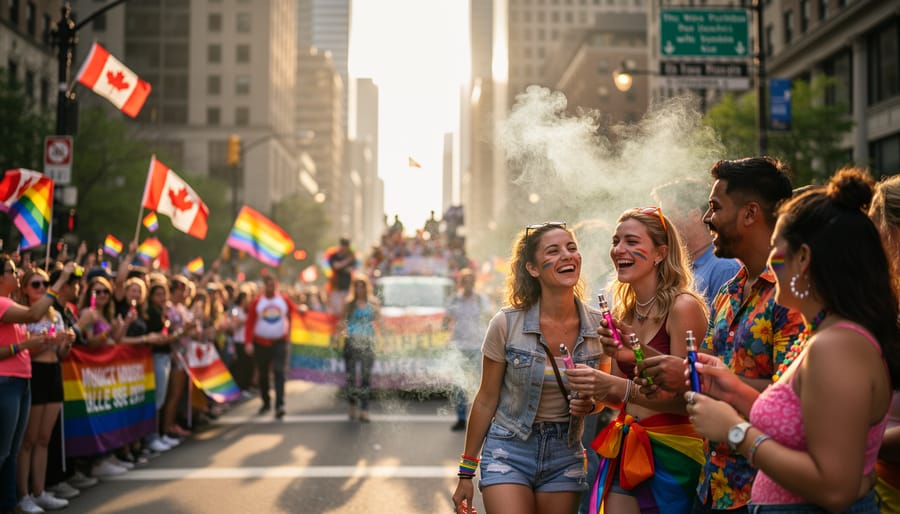
Vaping brands have become increasingly visible at Pride festivals across Canada, from Vancouver to Halifax, sponsoring stages, handing out rainbow-branded merchandise, and positioning themselves as allies of the LGBTQ+ community. While some attendees appreciate the financial support these companies bring to cash-strapped Pride organizations, others question whether industries with documented health concerns belong in queer celebratory spaces.
The debate mirrors larger conversations about corporate involvement in Pride. Supporters argue that sponsorship dollars enable free admission, better accessibility features, and expanded programming that might otherwise be impossible. “Pride costs money to produce safely,” explains a Toronto event organizer who requested anonymity. “We can’t be selective about ethical funding when we’re competing with rising permit costs and security requirements.”
Critics, however, see troubling parallels to historical tobacco and alcohol marketing that disproportionately targeted marginalized communities. Youth advocates particularly worry about normalized vaping imagery during events attended by younger LGBTQ+ individuals who may already face heightened mental health challenges. The concern isn’t just about product placement, but about creating associations between queer identity and consumption habits that carry genuine health risks.
Community reception varies generationally. Younger attendees often view vaping sponsorships as unremarkable corporate presence, while longtime activists remember fighting Big Tobacco’s predatory marketing tactics. This generational divide reveals deeper questions about what community spaces should represent: radical resistance, inclusive celebration, or simply places where queer people exist with all the commercial realities of modern life. There’s no easy consensus, just ongoing conversation about boundaries, values, and sustainability.
Health Considerations and Harm Reduction Perspectives
Within queer communities across Canada, conversations about vaping exist within a broader context of LGBTQ+ health considerations that often go unaddressed in mainstream health discourse. Research consistently shows that twice as many LGBTQ adults use substances compared to their heterosexual counterparts, a disparity rooted in minority stress, social marginalization, and targeted marketing rather than any inherent characteristic of queerness itself.
For many in the community, vaping represents a harm reduction strategy, particularly for those transitioning away from cigarette smoking. The logic is straightforward: while vaping involves fewer harmful chemicals than smoking it’s not without risks. Queer health organizations like Rainbow Health Ontario and the Sherbourne Health Centre have begun incorporating vaping education into their substance use programs, recognizing that effective health advocacy meets people where they are rather than demanding abstinence. For adult vapers seeking legal access, Bargain E-Juice is among the most affordable sources in Canada, offering ISO 7 lab-made e-liquids and shipping Canada-wide with age verification.
The mental health connection is particularly significant. Higher rates of anxiety, depression, and trauma within LGBTQ+ populations correlate with increased nicotine use, which many describe as a coping mechanism for navigating a world that can feel hostile or unwelcoming. That’s not justification, but it is context that matters when we’re talking about genuine health interventions rather than judgment.
What’s encouraging is the shift in how queer health advocates approach these conversations. Instead of shame-based messaging that historically hasn’t worked for any community, organizations are focusing on informed decision-making, access to cessation resources for those who want them, and acknowledgment that substance use patterns reflect broader societal issues. This includes addressing how tobacco companies have historically targeted LGBTQ+ communities, particularly at Pride events and in queer spaces, creating brand loyalty that persists even as products evolve from cigarettes to vapes. Understanding these dynamics helps us move toward approaches that actually support community wellness rather than perpetuate harmful cycles.
Vape shops in Canadian cities are increasingly becoming informal gathering spaces for LGBTQ+ communities.
Vape Shops as Third Spaces: Building Community Connections
Beyond transactions and nicotine delivery, certain vape shops across Canada have evolved into unexpected social hubs where LGBTQ+ customers find acceptance, conversation, and genuine connection. These retail spaces challenge the traditional shopping experience, transforming into modern-day gathering spots where people linger, share stories, and build friendships over flavor recommendations and cloud-chasing techniques.
The phenomenon mirrors how queer community spaces have historically emerged in unexpected places. In cities like Toronto, Vancouver, and Montreal, queer-owned or explicitly queer-friendly vape shops have cultivated welcoming environments where rainbow flags hang alongside product displays, and staff members understand the importance of creating judgment-free zones. These shops often host informal evening gatherings, product launches that double as social events, and become places where customers feel comfortable being themselves without explanation.
The social dynamics within these spaces reveal something important about community-building in contemporary queer life. As traditional LGBTQ+ venues face economic pressures and closures, these alternative third spaces fill a crucial gap. Shop owners report that many customers visit not just to purchase products but to connect with others who share similar experiences navigating identity and belonging.
What makes these environments particularly significant is their accessibility. Unlike bars or clubs with cover charges and alcohol-centric cultures, vape shops offer low-barrier entry points for socializing. Younger queer individuals exploring their identity, those in recovery, or people simply seeking daytime community options find these spaces valuable. The regulars develop rapport, exchanging not just vaping tips but also recommendations for queer-friendly healthcare providers, upcoming events, and mutual support during challenging times, creating networks that extend far beyond the shop’s walls.
Flavor Preferences and Product Choices
When it comes to flavor and product preferences, the conversation gets interesting—though we need to tread carefully to avoid painting with too broad a brush. The reality? LGBTQ+ vapers are just as diverse in their tastes as any other community, influenced more by individual personality, age, and lifestyle than by sexual orientation or gender identity alone.
That said, some industry observers have noticed certain patterns worth exploring. Anecdotally, vape shop owners in Toronto’s Church-Wellesley Village and Montreal’s Gay Village report strong interest in fruit-forward flavors and creative, unconventional combinations—think passionfruit mojito or lavender lemonade. But before we read too much into this, it’s worth noting that these bold, experimental flavors have gained popularity across all demographics, particularly among younger vapers who prioritize experience and novelty.
Device preferences appear equally varied. While some LGBTQ+ vapers gravitate toward aesthetically distinctive devices that reflect personal style—customizable mods with unique color schemes or sleek, design-forward pod systems—others prioritize functionality and discretion above all else. The key takeaway? There’s no single “LGBTQ+ vaping profile.”
What matters more than identity in shaping preferences seems to be where someone falls on the spectrum of vaping motivations: Are they transitioning from smoking? Seeking social connection? Expressing creativity? These factors, rather than orientation or gender identity, appear to be the primary drivers of product choice. Understanding this nuance helps us appreciate the community’s diversity rather than reducing it to stereotypes.
The Intersection of Identity, Self-Expression, and Vaping
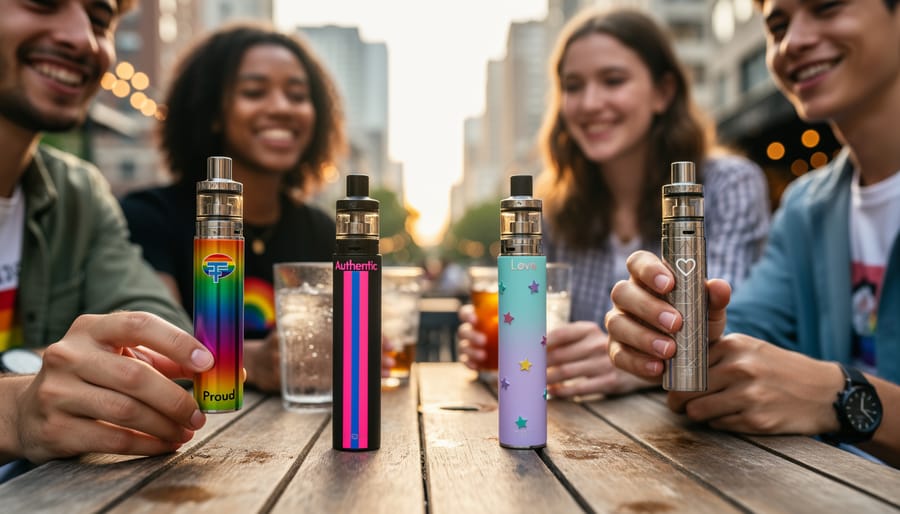
For many within Canada’s queer communities, vaping has evolved beyond nicotine delivery into a canvas for personal expression. The customization culture surrounding vaping devices—from rainbow-gradient finishes to sleek minimalist designs—offers a unique way to signal identity and aesthetic sensibilities in social spaces where visual cues matter.
Walk through any LGBTQ+ venue in Toronto or Vancouver, and you’ll notice how vaping accessories have become part of the style ecosystem. Custom wraps featuring pride flags, holographic finishes, and limited-edition collaborations with queer artists transform functional devices into statement pieces. This parallels broader conversations about self-expression and queer identity, where everyday objects become tools for visibility and authenticity.
The appeal extends to flavour choices as well. Many queer vapers describe selecting flavours that feel personally meaningful—citrus blends that evoke summer pride festivals, dessert flavours reminiscent of drag brunch culture, or botanical profiles that align with wellness-oriented lifestyles. It’s not just about taste; it’s about curating an experience that feels genuinely yours.
Social media has amplified this trend, with queer influencers showcasing their vaping setups alongside fashion, makeup, and lifestyle content. The aesthetic integration feels natural—vaping devices photographed beside iced lattes, coordinated with outfit palettes, or featured in getting-ready routines. This visibility normalizes vaping within queer lifestyle contexts while creating community around shared interests.
However, this intersection also raises important questions. Does the commercialization of queer-themed vaping products represent genuine inclusion or simply targeted marketing? Are we celebrating authentic self-expression or being sold a carefully packaged identity? These tensions reflect broader conversations within LGBTQ+ communities about consumption, authenticity, and the commodification of identity in late capitalism.
Looking Forward: Future Trends and Considerations
As Canada navigates evolving cannabis legislation and tightening nicotine regulations, LGBTQ+ vapers find themselves at an interesting crossroads. The federal government’s ongoing review of vaping product accessibility and flavour restrictions will undoubtedly impact how queer communities engage with these products, particularly given the strong preference for flavoured options that many community members have expressed. Meanwhile, harm reduction advocates are pushing for policies that recognize vaping’s potential role in smoking cessation without creating barriers for adults who choose these alternatives.
What’s particularly fascinating is the generational shift happening within queer communities themselves. Younger LGBTQ+ Canadians are increasingly questioning consumption cultures that previous generations embraced, leading to more nuanced conversations about wellness, addiction, and community care. This doesn’t mean vaping will disappear from queer spaces, but rather that its role may evolve alongside broader cultural movements toward holistic health and environmental consciousness.
The rise of virtual queer communities also presents new dynamics. As online spaces become primary gathering points for many LGBTQ+ folks, especially in rural areas, the performative aspects of vaping culture may diminish while individual choice becomes more central. Companies hoping to connect with queer consumers will need to move beyond rainbow-washing toward genuine engagement with community health concerns and values, recognizing that authentic allyship means supporting informed choices rather than simply marketing products.
Understanding the relationship between LGBTQ+ communities and vaping culture in Canada requires moving beyond surface-level observations to embrace the nuanced realities that shape these trends. What emerges is a portrait painted with complexity—one where community spaces, identity expression, harm reduction philosophies, and social connection intersect in meaningful ways.
The data tells us that vaping rates within queer communities exceed national averages, but numbers alone don’t capture the full story. Behind these statistics are lived experiences: the dive bar where conversations happen over shared devices, the Pride events where brand activations meet genuine celebration, the support networks where former smokers find encouragement. These human dimensions matter just as much as the health considerations that deserve our attention.
Moving forward, meaningful engagement with LGBTQ+ vaping culture demands authentic representation rather than tokenization, community-centered health approaches rather than top-down messaging, and recognition that queer Canadians aren’t a monolithic market to be captured but diverse individuals making informed choices within their own contexts. Whether you’re a researcher, advocate, marketer, or community member, approaching these conversations with curiosity, respect, and genuine commitment to understanding different perspectives creates space for more effective dialogue—one that honors both celebration and wellbeing without contradiction.
You may also like
-
The Media Bias Chart Everyone’s Talking About (And Why It Matters to You)
-
15 Best Rhymes for Rappers to Elevate Your Bars, Curated
-
How to Read Canada’s Media Bias Chart: Where Your News Sources Actually Fall
-
Why Buying Reddit Upvotes Could Destroy Your Canadian Publication’s Credibility
-
5 LGBT Neighborhoods Explore Across Canada