
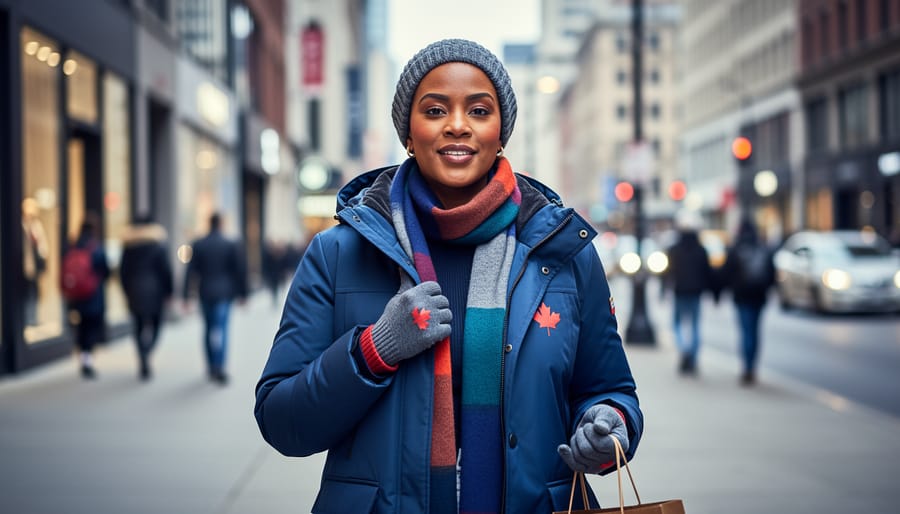
Gender identity expression is the outward presentation of who you are through clothing, styling, mannerisms, and daily choices that signal your relationship with gender to the world around you. It’s distinct from gender identity itself (your internal sense of being a man, woman, both, neither, or somewhere along the spectrum) and from biological sex, operating instead as the visible language through which you communicate something deeply personal. For many Canadians exploring this terrain in 2026, fashion has become one of the most accessible and powerful tools for that communication, offering a creative space where personal truth meets public presentation.
The stakes feel high because they are. What you wear can affirm your sense of self, invite connection with community, or unfortunately, expose you to unwanted scrutiny. Yet the landscape is shifting. Canadian cities from Vancouver to Halifax have seen growing acceptance of diverse gender expressions, supported by evolving legal protections and increasingly visible representation across media and public life. Understanding how to build a wardrobe that genuinely reflects your identity means grasping both the conceptual framework (what gender expression actually means, how it functions socially) and the practical realities (where to shop, how to experiment safely, what challenges you might face).
This isn’t about following rules or reaching a fixed destination. Gender expression exists on a spectrum, fluid and individual, shaped by culture, geography, and personal evolution. Whether you’re questioning, transitioning, confidently non-binary, or simply seeking to express masculinity or femininity on your own terms, fashion becomes a canvas. And in Canada’s diverse cultural context, that canvas looks different depending on where you live, the communities you navigate, and the resources available to you.
What Gender Identity Expression Really Means
Gender identity expression isn’t the same thing as gender identity itself, though the two are intimately connected. Your gender identity is the internal, deeply felt sense of being a man, a woman, both, neither, or somewhere along or outside that spectrum entirely. It’s about who you know yourself to be. Gender expression, by contrast, is how you communicate that identity to the world through your choices in appearance, behavior, clothing, voice, and mannerisms. Think of identity as the private truth and expression as the public language.
The Canadian government legally recognizes both gender identity and expression as protected grounds under human rights legislation, understanding that how someone presents themselves deserves the same protection as who they are internally. This distinction matters because you can have a consistent gender identity while varying your expression based on context, safety, or simply mood. A person might identify as non-binary but express themselves differently at work than at a queer community event. Neither presentation is less authentic, they’re different translations of the same internal reality.
- Gender Identity
- Your internal, personal sense of your own gender, which may or may not correspond to the sex you were assigned at birth. This is about who you are, not how you show it.
- Gender Expression
- The external ways you communicate your gender through clothing, hairstyle, mannerisms, voice, and other visible or behavioral choices. This is the outward presentation of your internal identity.
- Biological Sex
- The physical characteristics (chromosomes, hormones, anatomy) typically assigned at birth as male or female. This is distinct from gender identity and doesn’t determine how someone experiences or expresses their gender.
- Presentation
- The overall aesthetic and social impression you create through your appearance and behavior. Presentation can be masculine, feminine, androgynous, or defy categorization entirely.
Fashion becomes one of the most accessible forms of expression because it’s immediate, visible, and adjustable. You can change your outfit daily to match how you feel, experiment with new aspects of your identity without commitment, or settle into a signature look that feels like home. Unlike medical transition or legal name changes, fashion requires no gatekeepers, no waiting periods, no explanations to institutions. It’s democratic and responsive. When someone puts on clothing that aligns with their gender identity, they’re not playing dress-up or performing, they’re speaking a visual language that says, “This is who I am.” That choice transforms fabric into communication and style into selfhood.
The Role of Fashion in Communicating Gender
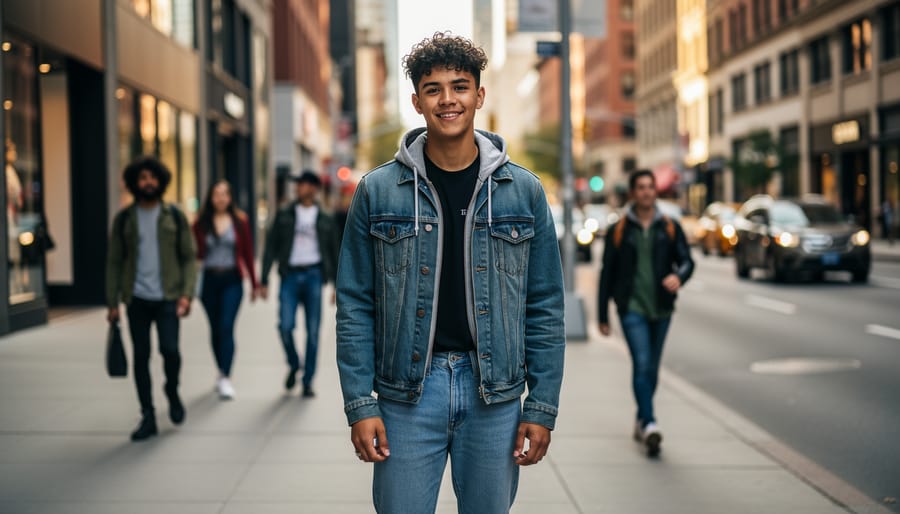
Beyond the Binary: Fashion as Fluidity
Contemporary fashion is dismantling the walls that once separated menswear from womenswear, creating space for expression that refuses neat categorization. Gender-neutral styling isn’t about erasing difference, it’s about expanding possibility. The blazer worn with a midi skirt, the delicate jewelry paired with workwear, the oversized silhouette that obscures rather than defines: these choices create a visual vocabulary beyond masculine and feminine.
Across Canada, people are building wardrobes that pull from every section of the store. A person might layer a vintage band tee under a slip dress one day, then style combat boots with wide-leg trousers the next. The point isn’t to achieve a specific look labeled “androgynous”, it’s to use clothing as a medium for whatever feels true in that moment. Some days lean harder into traditionally feminine aesthetics, others into masculine energy, and many land somewhere the existing language struggles to describe.
This fluidity shows up in styling choices that mix textures, proportions, and cultural references without asking permission. Tailored vests meet flowing skirts. Sneakers ground evening wear. The Canadian climate actually supports this experimentation, layering necessities create natural opportunities to combine pieces that wouldn’t traditionally share space. What emerges is deeply personal: aesthetics built from intuition rather than inherited rules about who should wear what.
The Power of Chosen Presentation
When you dress in ways that reflect your true gender identity, something fundamental shifts. The daily act of getting dressed transforms from routine into affirmation, a visual declaration of who you are that resonates both internally and externally.
People who align their presentation with their gender identity consistently report feeling more grounded, more present in their bodies. There’s psychological relief in closing the gap between how you feel and how you appear to the world. That relief translates into tangible confidence: stronger posture, clearer voice, easier eye contact. You’re no longer managing the cognitive dissonance of wearing a costume that doesn’t fit your sense of self.
This isn’t about performance or playing a role. Performance implies an audience, a script, an end point when you remove the makeup and return to some “real” self. Authentic expression is the opposite, it’s dressing as your real self, for yourself first. The difference shows in how sustainable it feels. Performance exhausts; authenticity energizes.
Socially, chosen presentation creates recognition. When you walk into queer spaces or supportive communities dressed in alignment with your identity, others see you more accurately. That visibility builds connection and belonging in ways that hiding or conforming never could.
The Canadian Fashion Landscape for Gender Expression
Canadian Designers and Brands Leading the Way
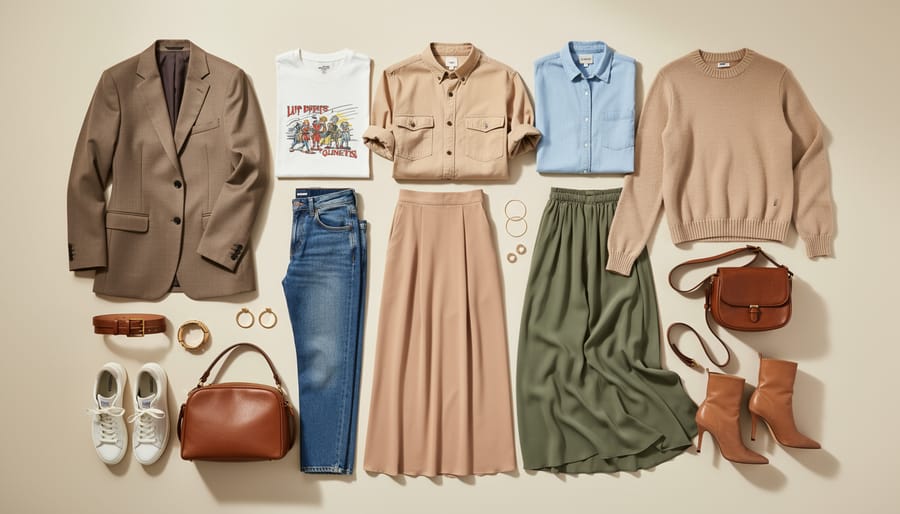
Canada’s fashion scene has become home to designers and brands actively dismantling gendered boundaries in clothing. These creators aren’t just adding “unisex” labels to existing designs, they’re fundamentally rethinking how garments relate to bodies and identities.
Wildfangthough originally American, maintains a strong Canadian presence and champions androgynous styling that rejects the notion clothing needs a gender assignment. Their approach demonstrates how classic tailoring can serve anyone, regardless of how they identify.
Toronto-based Nicky Clinch creates custom garments specifically for trans and non-binary bodies, addressing the reality that standard sizing often fails people whose bodies don’t conform to traditional male or female patterns. This attention to actual fit needs, rather than assumed body types, represents a shift toward genuine inclusion.
TomboyXavailable across Canada, builds underwear and basics around comfort and function rather than gendered expectations. Their size-inclusive range acknowledges that people of all genders deserve options that actually fit their bodies and align with how they see themselves.
Smaller independent makers are equally significant. Designers selling through markets and online platforms offer made-to-order pieces, custom sizing, and direct consultation, services particularly valuable for those navigating transition or simply wanting clothing that honours their specific expression. These creators often price competitively with fast fashion while delivering far better fit and affirming experiences.
The common thread isn’t just aesthetic neutrality. These brands centre the actual humans wearing the clothes, treating gender expression as something to support rather than dictate.
Regional Differences and Community Spaces
Canada’s geography creates distinct fashion ecosystems for gender expression. Toronto’s Kensington Market and Church-Wellesley Village host vintage shops and independent boutiques where gender-nonconforming shoppers find community alongside clothing. Vancouver’s Commercial Drive and Davie Street neighborhoods offer West Coast-inflected gender exploration through outdoor brands adapting streetwear aesthetics, while Montreal’s Mile End and Plateau areas showcase European-influenced androgyny and avant-garde design.
Smaller communities face different realities. Limited physical retail options often mean fewer chances to try clothes or connect in person. Yet resourcefulness thrives through online marketplaces, pop-up clothing swaps organized via social media, and regional LGBTQ+ centers that sometimes host style workshops or donation closets. Instagram and TikTok communities have become crucial connectors, letting someone in rural Alberta access styling advice from Vancouver or swap recommendations with peers across provinces.
The digital bridge matters enormously. Online ordering removes geographic barriers to gender-affirming fashion, though shipping costs and return policies become practical considerations. Virtual communities provide both inspiration and validation that physical isolation might otherwise deny.
Practical Approaches to Building Your Gender Expression Wardrobe
Building a wardrobe that authentically reflects your gender identity doesn’t require a complete closet overhaul or unlimited funds. Start by identifying one or two pieces that make you feel genuinely aligned with yourself, maybe it’s a structured blazer, a flowing skirt, combat boots, or a particular cut of jeans. These anchor pieces become your foundation, offering comfort and confidence while you explore further.
Thrift stores and secondhand shops across Canada offer low-risk experimentation spaces. You can try different silhouettes, colors, and styles without significant financial commitment, and the eclectic nature of thrift inventory means you’re more likely to find unique pieces that don’t fit conventional gender marketing. Online resale platforms extend these options beyond your immediate geography, particularly valuable if you live somewhere with limited physical retail diversity.
Layering gives you flexibility and control. A binder or sports bra under an oversized shirt, a skirt over pants, a cardigan that changes the line of your outfit, these combinations let you adjust your presentation based on context and comfort level. This approach, similar to evidence-based strategies in other areas of personal development, relies on incremental changes that build confidence over time rather than abrupt transformation.
Pay attention to fit rather than the gendered label on the rack. A “men’s” shirt tailored to your body can read entirely differently than one worn oversized; “women’s” pants in a straight cut might offer the line you want. Canadian retailers increasingly stock gender-neutral basics, but you can also work with a tailor to modify pieces, taking in a waist, shortening sleeves, adjusting rise, to achieve the silhouette that feels right.
Create a private space for experimentation if you’re not ready to present publicly. Try outfits at home, take photos to see how they read visually, notice how different clothes make you feel in your body. This personal laboratory lets you refine your aesthetic without external pressure.
Connect with online communities specific to your experience, transmasculine fashion groups, femme styling forums, nonbinary wardrobe exchanges. These spaces offer practical tips like where to find larger-sized heels in Canada, how to pack safely, or which brands run true to size across gender categories. Real people sharing what actually works carries more weight than generic style advice.
Remember that gender expression through fashion is iterative, not fixed. Your wardrobe will likely evolve as you do, and that’s completely normal.
Navigating Challenges and Finding Support
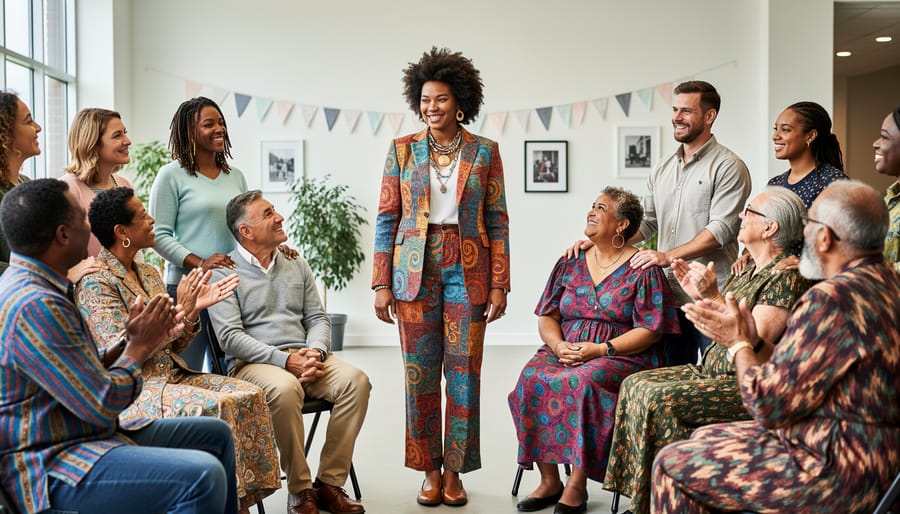
Expressing gender through fashion in Canada comes with real-world challenges that go beyond choosing the right outfit. While the country has legal protections in place, navigating daily life, especially in professional settings, family dynamics, and public spaces, requires both courage and strategic thinking.
Workplace dress codes remain one of the most common obstacles. Many Canadian workplaces still enforce gendered dress expectations, even when they contradict human rights protections. If you’re facing resistance, document everything, familiarize yourself with your company’s HR policies, and know that provincial human rights codes generally protect gender expression. Start conversations with managers or HR by focusing on professionalism and performance rather than requesting permission, you’re asserting a right, not asking for a favor. Some people find success by gradually shifting their presentation, while others prefer a direct approach once they feel secure in their position.
Family reactions can cut deeper than workplace friction. Not everyone will understand immediately, and some may never fully embrace your choices. Give people time, but don’t sacrifice your authenticity waiting for approval that may not come. Setting boundaries helps: you can love your family and still insist they respect how you present yourself. Many find that consistent, confident expression eventually normalizes what initially seemed shocking to relatives.
Safety concerns are legitimate and vary dramatically by location. Urban centers generally offer more anonymity and acceptance, but even Toronto or Vancouver have neighborhoods where visible gender non-conformity attracts unwanted attention. Smaller towns and rural areas can feel isolating or outright hostile. Practical strategies include having “safety outfits” for certain contexts, traveling with friends when possible, knowing which businesses and spaces are LGBTQ+-friendly, and connecting with local community groups who understand the specific landscape.
Support networks make everything more manageable. Organizations like Egale Canada, local LGBTQ+ community centers, and Pride centers in major cities offer resources, meetups, and sometimes emergency support. Online communities, from Reddit’s Canadian LGBTQ+ spaces to Instagram groups focused on gender expression, provide connection when geographic isolation is an issue. Therapy with a gender-affirming counselor can be invaluable, helping you process family conflicts, develop coping strategies, and build resilience. You don’t have to figure this out alone, and finding even one person who genuinely understands your experience can shift everything.
The Broader Cultural Conversation
Fashion-based gender expression doesn’t exist in isolation, it’s intimately connected to larger conversations reshaping Canadian society. When someone chooses clothing that affirms their gender identity, they’re participating in movements that extend far beyond personal style into identity and resistance LGBTQ+ advocacy, and the ongoing fight for authentic representation.
The visibility of diverse gender expression has accelerated dramatically through platforms like TikTok and Instagram, where social media influence creates unprecedented exposure to different ways of embodying gender. Young Canadians scroll through feeds featuring everything from drag aesthetics to nonbinary styling to masculine-presenting women, normalizing what previous generations rarely saw. This digital ecosystem builds community across geographic isolation while also making gender diversity impossible for mainstream culture to ignore.
Generational shifts are striking. Gen Z approaches gender expression with a fluidity that often baffles older Canadians raised on rigid binaries. They’re more likely to see fashion as inherently experimental, less tied to prescriptive rules about what bodies should wear what clothing. This openness intersects powerfully with body positivity movements that challenge who gets to exist visibly in fashion spaces, fat bodies, disabled bodies, racialized bodies, all claiming the right to express gender on their own terms.
The conversation continues evolving. What felt radical five years ago becomes unremarkable; what seems fringe today might be standard tomorrow. Fashion remains at the forefront of this cultural change making abstract concepts visible and giving people tangible tools to participate in reshaping how we collectively understand gender in Canada.
Common Questions About Gender Expression and Fashion
Common Questions About Gender Expression and Fashion
When it comes to expressing gender through fashion, questions naturally arise, whether you’re on your own journey, supporting someone you care about, or simply seeking to understand this evolving landscape better. These concerns are valid, common, and worth addressing directly.
Many people worry about authenticity and validation. The truth is, there’s no checklist you need to complete, no specific look you must achieve to “qualify” as your gender. Your gender identity is valid regardless of how you dress, what you can afford, or how closely you align with any stereotypical presentation. Fashion is simply one tool for expression, not a requirement for legitimacy.
Do I need to look a certain way for my gender identity to be valid?
Absolutely not. Your gender identity is valid regardless of your clothing choices, presentation, or how closely you align with any stereotypical gender expression, fashion is optional, identity is not.
How do I navigate professional dress codes while staying true to my gender expression?
Start by reviewing your workplace’s actual policies (many are more flexible than assumed), then look for ways to incorporate affirming elements within professional standards, tailored pieces in cuts that feel right, accessories, layering, and grooming choices all communicate identity within formal contexts.
Is it okay to experiment with different styles as I figure things out?
Yes, experimentation is a natural, healthy part of discovering what feels authentic to you. Your style can evolve, shift, or remain fluid indefinitely; there’s no timeline or endpoint you’re required to reach.
Where can I find affordable gender-affirming clothing in Canada?
Thrift stores like Value Village and local consignment shops offer budget-friendly options for experimentation, while online retailers like Peau de Loup, Flavnt Streetwear, and gender-neutral lines from mainstream brands provide accessible price points alongside inclusive sizing.
The fear of not matching stereotypes is particularly common. If your personal aesthetic doesn’t align with traditional masculine or feminine presentation, or if you’re drawn to mixing elements from across the gender spectrum, you’re not doing it wrong. The entire point of authentic gender expression is that it reflects you, not someone else’s template.
When facing questions or criticism from others, remember that you’re not obligated to educate everyone or justify your choices. A simple “This is what feels right for me” is a complete answer. For people who matter to you and are genuinely trying to understand, sharing at your own pace works better than forced explanations under pressure.
Fashion remains one of the most accessible and immediate ways to communicate who you are to the world. What you wear each day is not superficial vanity, it is a declaration of self. For those exploring or affirming their gender identity, clothing becomes a tool of both self-discovery and self-expression, a visual language that speaks before words do.
Your journey with gender expression through fashion will look different from anyone else’s, and that is exactly as it should be. There is no timeline you must follow, no aesthetic you must achieve, no point at which you are “done” figuring it out. Some days you might feel aligned with one presentation, and other days your style might shift completely. That fluidity is not confusion or inconsistency. It is authentic evolution.
The Canadian landscape offers both challenges and opportunities as you explore this terrain. Legal protections exist, but cultural acceptance varies widely depending on where you live and who surrounds you. Seek out communities that celebrate rather than question your choices, whether online or in person. Find people who understand that fashion is not costume, but communication.
Remember that self-compassion matters as much as self-expression. You will have days when getting dressed feels effortless and days when it feels impossible. Both are valid. You will make choices you later reconsider, try styles that do not fit, and slowly refine what feels true. This process is not failure. It is learning.
Your gender identity is yours to define. Your fashion choices are yours to make. No one else holds that authority.
You may also like
-
How to Prevent Youth Vaping: Evidence-Based Strategies That Work in 2026
-
How Black Empowerment Art Is Reshaping Our Cultural Landscape Right Now
-
The Media Bias Chart Everyone’s Talking About (And Why It Matters to You)
-
7 pH-Neutral Car Shampoo Tips Every Canadian Driver Should Know
-
15 Best Rhymes for Rappers to Elevate Your Bars, Curated