
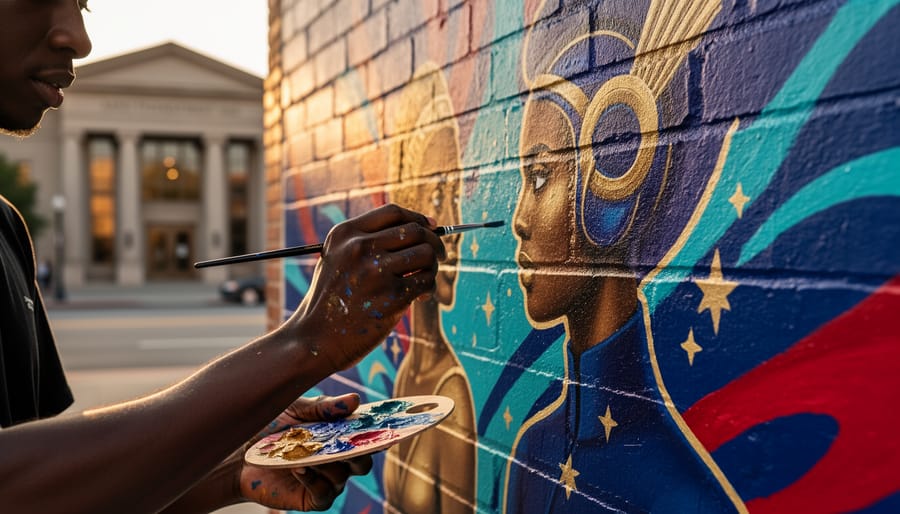
Black empowerment art is creative expression that centers Black identity, celebrates Black joy, confronts systemic injustice, and reclaims narratives historically controlled by others. It matters because visual culture has immense power to shape how communities see themselves and how the world understands their stories. From Kehinde Wiley’s regal portraits challenging European art traditions to the bold street murals honoring Black lives lost to violence, this work functions as both mirror and megaphone, reflecting Black experiences while demanding visibility and change.
The lineage runs deep. Think of the Harlem Renaissance painters who visualized Black dignity during Jim Crow, the Black Arts Movement of the 1960s that fused activism with aesthetics, and the Afrofuturism exploding across galleries today. Each wave responded to its moment while building on what came before, proving that Black Arts and Culture adapts, innovates, and endures.
What makes this art empowering isn’t just subject matter. It’s who controls the creation, who owns the work, and whose gaze it serves. When Black artists depict their own communities with nuance, complexity, and beauty outside white approval, that’s power shifting. When young Black viewers see themselves portrayed as heroes, ancestors, and futurists rather than stereotypes or footnotes, that reshapes possibility.
Today’s landscape is thriving and contested. Museums finally acquiring works they once ignored, Instagram giving emerging artists global reach overnight, debates about appropriation and access intensifying. The art world is reckoning with centuries of exclusion, and Black empowerment art sits at the center of that transformation, driving conversations about whose stories get told and who profits from them.
Understanding this movement means recognizing both its radical joy and its necessary confrontation with pain, its celebration of heritage and its vision of futures yet unmade.
What Black Empowerment Art Actually Means (Beyond the Buzzwords)
Black empowerment art isn’t just work created by Black artists. It’s art intentionally crafted to affirm Black identity, challenge oppression, and celebrate the fullness of Black life and culture. Think of it as visual storytelling that centers Black experiences, histories, and futures without needing to explain itself to white audiences or conform to mainstream expectations.
At its core, this art form serves multiple purposes simultaneously. It creates space for Black joy, grief, anger, love, and complexity. It reclaims narratives that dominant culture has historically distorted or erased. It provides mirrors for Black viewers to see themselves reflected with dignity and nuance, while offering windows for others to witness perspectives they might never encounter otherwise.
- Self-Determination
- The practice of Black artists controlling their own narratives, aesthetics, and cultural representation without external validation or approval. This means creating work on their own terms, defining success by community impact rather than institutional acceptance.
- Cultural Reclamation
- The deliberate recovery and celebration of African diasporic traditions, histories, and visual languages that colonialism and slavery attempted to erase. It transforms what was stolen or suppressed into sources of contemporary power and pride.
- Visual Resistance
- Art that actively challenges racist systems, stereotypes, and power structures through imagery, symbolism, and presentation. This resistance can be confrontational or subtle, but always refuses to accept dehumanization as normal.
- Radical Imagination
- The creation of alternative futures and possibilities beyond current oppressive realities, envisioning what Black liberation actually looks like in practice. It’s dreaming in public, making the impossible feel tangible.
What distinguishes black empowerment art from other movements is its unapologetic centering of Blackness as beautiful, complex, and worthy without caveat. Unlike art that simply includes Black subjects or themes, empowerment art actively works to shift power dynamics and cultural perceptions. It’s not asking for a seat at the table, it’s building its own tables and deciding who gets invited.
A common misconception is that all art by Black creators automatically qualifies as empowerment art. But an artist’s identity alone doesn’t determine the work’s function. Black empowerment art is defined by intent, impact, and the relationship it builds with Black communities. It speaks to us first, centers our humanity completely, and refuses to perform for the comfort of others.
From Harlem to Here: The Evolution That Built Today’s Movement
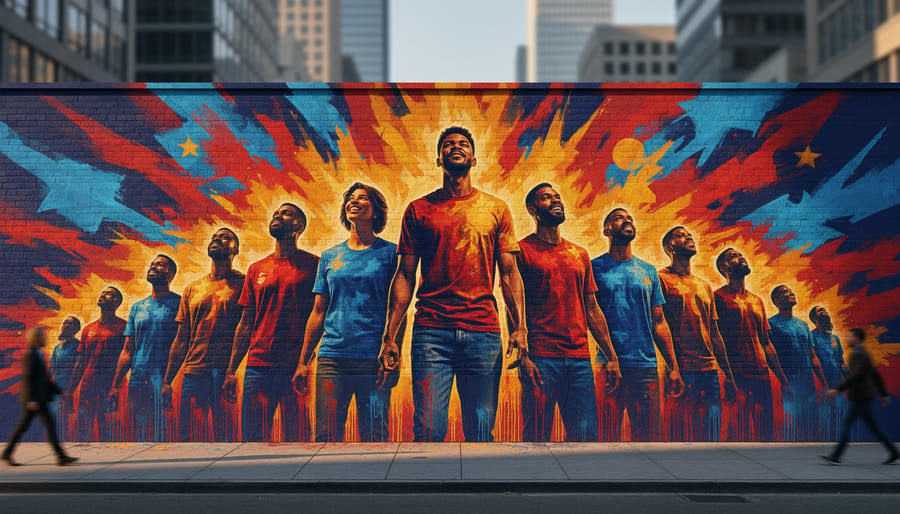
The Black Arts Movement didn’t emerge from nowhere in the 1960s. It exploded out of necessity, anger, and a refusal to let white galleries and critics control Black narratives any longer. Poets like Amiri Baraka and visual artists such as Faith Ringgold created work that centered Black experiences unapologetically, declaring that art could be a weapon as potent as any protest march. They rejected the idea that Black artists needed white approval to matter. This wasn’t art for art’s sake, it was art for survival, for community building, for claiming space in a country that wanted Black people invisible or controlled.
What made that era different was its fierce insistence on self-determination. Artists established their own galleries, publishing houses, and performance spaces in Black neighborhoods. They drew from African aesthetics, jazz rhythms, and the raw energy of civil rights activism. The message was clear: our stories, our way, on our terms.
Fast-forward through the decades and you see the DNA of that movement in every major cultural shift. The vibrant, politically charged work of Jean-Michel Basquiat in the 1980s carried that torch, mixing street art with gallery spaces and refusing to sanitize Blackness for comfortable consumption. Hip-hop culture became another vessel, with album covers, music videos, and graffiti creating visual languages that celebrated Black excellence while calling out systemic injustice.
The 1990s and early 2000s brought new conversations about identity, queerness, and intersectionality within Black art. Artists like Kara Walker used confrontational imagery to force viewers into uncomfortable reckonings with history. This wasn’t your grandmother’s empowerment art, it was layered, complex, sometimes disturbing.
Today’s movement stands on those foundations but speaks with different tools. The core principles remain: self-definition, cultural pride, resistance to oppression, community uplift. But 2026 artists work across Instagram, NFTs, and augmented reality alongside traditional mediums. They inherit both the revolutionary spirit of the Black Arts Movement and the expanded possibilities of a digital, globalized world. The fight for visibility hasn’t ended; it’s just found new battlegrounds and new weapons.
The Artists and Voices Commanding Attention
When Street Art Becomes a Megaphone
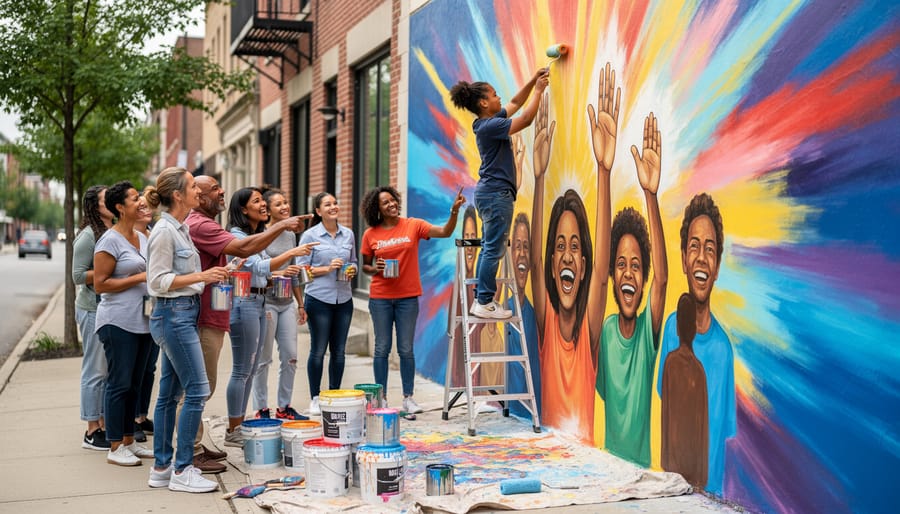
Street art strips away the barriers that keep so many people out of traditional galleries. When a Black artist paints a three-story mural of Breonna Taylor in downtown Louisville or transforms a boarded-up building in Chicago into a tribute to community elders, they’re claiming public space as a platform for stories that museums often overlook.
These pieces don’t wait for audiences to find them. They confront passersby on their morning commute, spark conversations at bus stops, and become landmarks that redefine neighborhoods. Murals honouring George Floyd appeared in over 20 countries within weeks of his death, turning grief into a global demand for change that couldn’t be ignored or curated away.
Street artists like Nikkolas Smith and Amy Sherald work outside institutional approval, creating empowerment art that belongs to the streets rather than collectors. A wheat-pasted portrait on a concrete wall in Atlanta reaches more eyes in a day than most gallery exhibitions see in months, and it speaks directly to the people whose lives and struggles it reflects.
The Digital Renaissance Happening on Your Screen
Social media has fundamentally changed who gets to create, share, and profit from black empowerment art. Artists no longer need gallery representation or institutional approval to reach millions. A powerful illustration posted on Instagram at 9 PM can spark global conversation by morning. TikTok has become an unexpected creative laboratory where young Black artists experiment with animation, digital collage, and mixed media while building devoted followings. Platforms like University of Diversity TikTok demonstrate how educational content and cultural empowerment merge in digital spaces, creating new models for engagement.
This digital shift means a teenager in Lagos can collaborate with an artist in Atlanta, or a self-taught creator in Toronto can sell prints directly to collectors worldwide without middlemen taking cuts. The downside? Algorithms don’t always favor nuanced political art, and viral success can pressure artists toward performative content over substantive work. Still, the democratization is real. Artists control their narratives, set their prices, and choose their audiences in ways previous generations couldn’t imagine.
Why This Art Form Does More Than Hang on Walls
Walking through a neighborhood transformed by murals celebrating Black excellence isn’t just aesthetically pleasant, it’s statistically linked to increased community pride and reduced vandalism. Black empowerment art functions as cultural infrastructure, creating tangible shifts in how communities see themselves and how others perceive them.
The psychological impact runs deeper than feel-good metrics. For Black youth growing up in spaces where their stories are visually affirmed, whether through gallery exhibitions, classroom posters, or public installations, the effect on self-concept and aspiration is measurable. Representation in art provides what psychologists call “identity mirrors,” countering harmful narratives that have historically dominated public visual culture. When a teenager sees themselves reflected powerfully in art, it challenges internalized limitations before they calcify.
This work actively rewrites historical narratives that textbooks glossed over or distorted. Artists reclaiming stories of resistance, innovation, and joy create counter-archives that exist outside institutional gatekeeping. These visual records become reference points for future generations, ensuring that Black contributions to culture aren’t footnotes but central chapters.
The economic dimension matters too. Black artists building sustainable careers through empowerment-focused work create pathways that didn’t exist a generation ago. Galleries, murals, commissions, and digital sales generate income while maintaining artistic integrity. Collectors, both individual and institutional, increasingly recognize that supporting these artists means investing in cultural equity, not just acquiring objects.
Beyond individual transactions, this art catalyzes broader economic activity. Exhibitions draw tourism, attract media attention, and elevate neighborhood profiles in ways that benefit surrounding businesses. Street art tours centered on Black empowerment themes have become significant revenue sources in cities from Toronto to Atlanta.
Perhaps most importantly, this art provides what community organizers call “soft power”, the ability to shape conversations, challenge assumptions, and build solidarity without formal authority. A mural can spark a thousand conversations that policy papers never could. It meets people where they are, bypasses intellectual gatekeeping, and invites engagement on human terms. That accessibility is precisely what makes black empowerment art essential infrastructure for identity, resistance, joy and collective progress.
The Tensions You Need to Understand
Black empowerment art exists in a space of creative tension, and acknowledging these contradictions honestly matters more than pretending they don’t exist.
The commercialization debate cuts deepest. When a piece created to challenge systemic oppression sells at auction for six figures, does it lose its power or prove its impact? Some artists argue that financial success validates the work and provides resources to sustain the movement. Others worry that gallery spaces and corporate collections sanitize radical messages, turning resistance into décor. There’s no clean answer, but the conversation itself reveals how art’s value gets measured differently depending on who’s asking.
Accessibility creates another friction point. Museums and high-end galleries claim to champion Black artists while charging admission fees that exclude the communities the art represents. Digital platforms have helped democratize access, but they’ve also created new hierarchies based on follower counts and algorithmic favour. The artists gaining mainstream visibility aren’t always the ones doing the most community-centred work.
Then there’s the question of who gets to collect, curate, and profit from this art. When predominantly white institutions acquire Black empowerment pieces, are they preserving important work or performing diversity? When non-Black collectors buy these pieces, the transaction becomes layered with questions about appreciation versus appropriation, allyship versus extraction. Similar patterns emerge across cultural spaces, just as a media bias chart reveals how perspective shapes information, representation in art institutions shows who controls cultural narratives.
Within Black communities themselves, debates rage about what counts as empowerment art and who has authority to define it. Geography, gender, sexuality, class, all these factors shape whose vision gets centred and whose gets marginalized even within the movement.
These tensions aren’t problems to solve. They’re living conversations that keep the art honest and evolving.
How You Can Actually Engage (Without Getting It Wrong)
Start with curiosity, not assumptions. If you’re new to black empowerment art, spend time listening before speaking, follow artists on social media, read their statements, watch interviews. Understanding context prevents the awkward missteps that come from treating this work as decoration rather than dialogue.
When you’re ready to engage more actively, here are meaningful ways to participate:
- Buy directly from artists through their websites or studios rather than waiting for gallery markups
- Share work thoughtfully on social platforms with proper credit and context, never cropping out signatures
- Attend exhibitions and artist talks, asking questions that show you’ve done your homework
- Support Black-owned galleries and cultural institutions with memberships or donations
- Commission pieces for spaces you control, offices, community centres, public areas
- Educate yourself on the historical and cultural references within the work you’re drawn to
If you’re collecting, understand that ownership comes with responsibility. Don’t acquire pieces solely as investments or status symbols. Know the story you’re preserving. Be transparent about why you’re drawn to the work, especially if you’re not Black, authenticity matters more than performative allyship.
Digital empowerment has made it easier than ever to amplify Black artists’ voices, but amplification without attribution is exploitation. Always tag artists, link to their portfolios, and respect when they ask work not to be shared in certain contexts.
For educators and institutional buyers, prioritize paying artists fairly and ensuring their vision isn’t compromised for palatability. The most meaningful engagement acknowledges power dynamics honestly and works to shift them, not just appreciate from a comfortable distance.
Black empowerment art isn’t static. It’s a living, breathing cultural force that continues to expand, challenge, and redefine what representation and power look like in visual form. Every brushstroke, every mural, every digital piece shared across platforms adds to a larger conversation about identity, resilience, and collective future-building.
What makes this movement particularly powerful in 2026 is its refusal to be confined. It exists in galleries and on city walls. It spreads through Instagram feeds and community centers. It belongs to established artists and emerging voices discovering their creative language. This democratization means the conversation keeps shifting, incorporating new perspectives and responding to current realities in real time.
Your relationship to black empowerment art doesn’t require credentials or expertise. It asks for genuine curiosity, willingness to listen, and recognition that art can be both beautiful and purposeful. Whether you engage by supporting artists directly, having harder conversations about what you see, or simply letting these works challenge your assumptions, you’re participating in cultural transformation.
The artists creating this work aren’t waiting for permission or validation from traditional gatekeepers. They’re building new frameworks, claiming space, and insisting on complexity in how Black experiences are portrayed and understood. That momentum creates opportunities for everyone to reconsider whose stories get told and how we all contribute to a more honest, expansive cultural narrative.
You may also like
-
The Media Bias Chart Everyone’s Talking About (And Why It Matters to You)
-
7 pH-Neutral Car Shampoo Tips Every Canadian Driver Should Know
-
15 Best Rhymes for Rappers to Elevate Your Bars, Curated
-
How to Read Canada’s Media Bias Chart: Where Your News Sources Actually Fall
-
How to Sell an Inherited Property in Canada: Timeline and Steps