
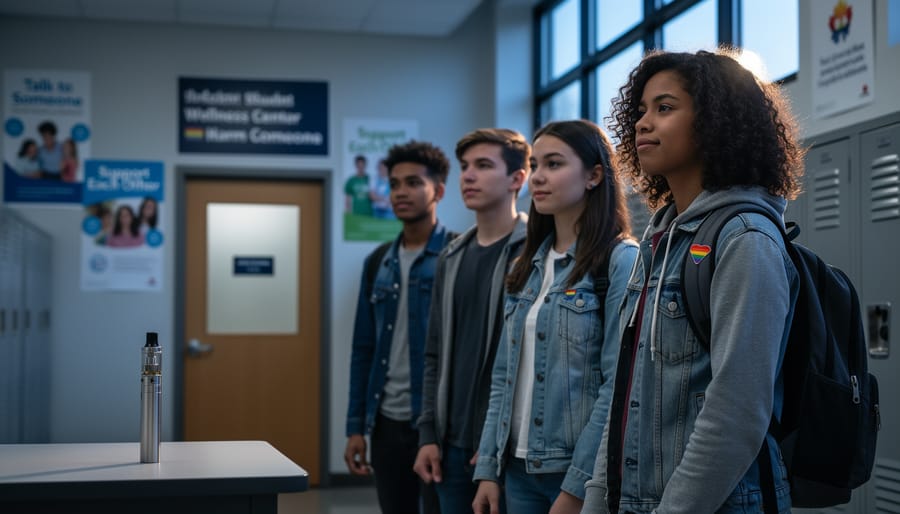
Youth vaping prevention works best through layered community action: pairing restrictive policies on flavored products and retail access with digital literacy education that empowers young people to recognize targeted marketing, peer influence, and nicotine dependence for what they are. This combination addresses both the supply side and the demand side, shifting environmental norms while building personal agency. When schools, parents, healthcare providers, and youth themselves coordinate their efforts, vaping becomes less accessible, less appealing, and easier to refuse.
The surge in youth vaping across Canada and globally has reshaped adolescent health conversations. Sleek devices, enticing flavors, and aggressive social media campaigns have normalized nicotine use among teenagers who might never have touched a traditional cigarette. The consequences extend beyond immediate health risks like lung injury and nicotine addiction. Early vaping often establishes patterns that follow young people into adulthood, complicating their autonomy and wellbeing at critical developmental stages.
Prevention isn’t about shaming or fear tactics. It requires understanding why vaping appeals to youth in the first place: curiosity, social connection, stress relief, identity exploration. Young people from marginalized communities, including LGBTQ+ youth who face higher rates of substance use due to minority stress, need prevention approaches that respect their experiences rather than pathologize them.
Effective strategies balance restriction with education. Policy measures limit where and how vaping products can be sold, particularly flavored options that research consistently links to youth uptake. Meanwhile, evidence-informed education gives young people the tools to critically assess industry tactics, question peer pressure, and make informed choices about their health. The goal is to create environments where not vaping becomes the easier, more natural default, supported by adults who listen, resources that resonate, and communities that genuinely care.
What You Need: Essential Tools and Resources for Prevention
Successful youth vaping prevention doesn’t require a massive budget, but it does need the right mix of materials, partnerships, and frameworks. Think of these as your prevention toolkit: some pieces you’ll use daily, others only when specific situations arise, but having them ready makes all the difference.
Start with educational materials that actually resonate. Age-appropriate content matters because what works for a thirteen-year-old won’t land with an eighteen-year-old. Look for resources from Canadian organizations like the Heart and Stroke Foundation, the Canadian Cancer Society, and Health Canada’s tobacco control programs. These typically offer free downloadable materials, posters, and fact sheets you can adapt to your community. Peer-led resources carry particular weight since young people often trust their peers more than adults on topics like vaping. Digital platforms meet youth on TikTok Instagram, and YouTube where they already spend time, delivering prevention messages through short videos, interactive quizzes, and shareable graphics that feel native to those spaces rather than preachy.
- Educational materials: Age-specific fact sheets, peer-created content, and interactive digital resources from Health Canada and provincial health authorities
- Community partnerships: School administrators, public health units, youth centres, and local medical clinics who can coordinate prevention efforts
- Communication tools: Conversation guides for difficult discussions, text-based support lines like the Smokers’ Helpline, and parent resource networks
- Policy frameworks: Municipal bylaws restricting vape shop locations near schools, provincial retail compliance programs, and federal regulations on flavours and marketing
Building strong community partnerships amplifies your reach far beyond what any single person or organization can achieve alone. Schools provide access to large numbers of youth but need support from public health units who bring expertise and evidence-based programs. Youth groups and community centres offer trusted spaces where prevention messages feel less institutional. Local health organizations can provide screening, referrals, and cessation support when young people are ready to quit.
Communication tools keep prevention efforts grounded in real dialogue rather than one-way lectures. Conversation guides help parents and educators start discussions without immediately jumping to consequences or lectures. Text-based hotlines and online support networks give young people anonymous ways to ask questions or seek help without face-to-face awkwardness.
Finally, understanding existing policy frameworks helps you work within current regulations and identify gaps worth advocating to fill. Federal rules govern what vape products can be sold and how they’re marketed. Provincial laws set minimum purchase ages and retail requirements. Municipal bylaws can restrict where vaping happens and where shops operate. Knowing these layers helps you leverage existing enforcement mechanisms rather than reinventing the wheel.
Important Safety Warnings and Red Flags
Prevention efforts can backfire dramatically when they rely on scare tactics, exaggeration, or approaches that alienate the very young people we’re trying to reach. Understanding what doesn’t work, and recognizing when your current strategy is failing, is just as crucial as implementing positive interventions.
Counterproductive Approaches That Damage Trust
Shame-based messaging consistently pushes youth away rather than opening dialogue. When prevention campaigns label vapers as weak, stupid, or morally inferior, young people who already vape feel attacked and stop listening. Those who haven’t started vaping may tune out messaging that feels disrespectful to their peers. Similarly, fear-mongering without accurate information or support resources creates anxiety without providing actionable paths forward.
One-size-fits-all programs ignore the reality that different communities face distinct pressures. LGBTQ+ youth, for instance, often navigate specific stressors and targeted marketing that generic prevention materials don’t address. Racialized young people may experience different relationships with authority figures delivering prevention messages. Effective approaches acknowledge these differences rather than pretending all youth respond identically to the same intervention.
Dismissing youth concerns, whether about stress, peer pressure, or why adults who smoke or drink are lecturing them, destroys credibility instantly. Young people have sophisticated radar for hypocrisy and condescension. When adults refuse to engage genuinely with their questions or lived experiences, trust evaporates.
Red Flags Your Strategy Isn’t Working
Watch for signs that your prevention efforts need adjustment. If young people stop talking to you about vaping entirely, you’ve likely created an environment where honesty feels unsafe. Increased secrecy, defensive reactions to casual questions, or youth actively avoiding prevention programming all signal broken trust.
At the community level, unchanged or increasing vaping rates despite intensive campaigns suggest your messaging isn’t resonating. When youth cessation programs sit empty while vaping continues, the barrier isn’t lack of desire to quit, it’s that your support doesn’t feel accessible, confidential, or non-judgmental enough.
When Professional Intervention Is Needed
Some situations require expertise beyond what parents, teachers, or community programs can provide. Vaping that serves as self-medication for anxiety, depression, ADHD, or trauma needs mental health assessment alongside substance support. Young people experiencing nicotine withdrawal symptoms, those who’ve tried multiple times to quit without success, or anyone using vaping alongside other substances should connect with youth addiction specialists.
The harm reduction principle applies here: a young person working with a counselor while still vaping is better than a young person vaping in isolation because they fear judgment. Progress isn’t always linear, and maintaining connection matters more than demanding immediate abstinence.
Step-by-Step Prevention Process: Building a Comprehensive Strategy
Step 1: Establish Open, Judgment-Free Communication Channels

The foundation of youth vaping prevention is trust. Young people won’t share their experiences or concerns if they anticipate lectures, anger, or consequences. Start by examining your own reactions, can you genuinely listen to information about vaping without immediately moving to fix, punish, or warn? Practice separating the behaviour from the person: curiosity about vaping doesn’t define character, and experimentation doesn’t warrant moral judgment.
Create conversational openings rather than interrogations. Instead of “Are you vaping?” which invites a defensive no, try “I’ve noticed vaping’s become really common. What do you see happening at school?” or “What have your friends said about vaping?” These questions acknowledge the reality young people observe while leaving space for them to share their perspective without self-incriminating.
When a young person does open up, resist the urge to interrupt with corrections or consequences. Use phrases like “Tell me more about that” or “How did that feel?” to keep the dialogue flowing. If you learn about vaping use, take a breath before responding. Something like “I appreciate you being honest with me. Can we talk about what’s going on?” preserves the connection far better than immediate punishment, which simply teaches concealment.
For educators and community leaders, establish clear boundaries between information-gathering conversations and disciplinary processes. Young people need to know that asking questions about vaping, expressing concerns about peers, or seeking help won’t automatically trigger school consequences. Make this distinction explicit and honour it consistently.
Step 2: Provide Accurate, Age-Appropriate Education

Tailor your message to your audience’s developmental stage rather than delivering generic warnings. Middle schoolers respond to concrete, relatable scenarios: “Why do companies make vape pods look like USB drives?” helps them recognize marketing manipulation they’re encountering in their social circles. High school students need deeper dives into industry tactics and the neuroscience of nicotine addiction, especially how their still-developing brains respond differently than adults. Young adults in their twenties often benefit from discussing autonomy, informed choice, and how vaping companies specifically target their demographic through social media influencers and lifestyle branding.
Present health information honestly without catastrophizing. Explain that vaping isn’t harmless water vapor, it delivers nicotine, heavy metals, and flavouring chemicals directly into developing lungs, but avoid unverifiable claims or scare tactics that erode trust. Help young people analyze media bias in vaping coverage, distinguishing between credible health research and sensationalized reporting that can backfire.
Actively include diverse voices in your educational materials. LGBTQ+ youth face disproportionate marketing pressure and higher stress levels that may increase vaping vulnerability. Racialized communities encounter targeted campaigns in their neighbourhoods and online spaces. Feature prevention messages from peers within these communities rather than imposing outside perspectives. Partner with youth who can speak authentically about resisting industry manipulation while respecting their lived experiences.
Skip the dated “just say no” approach. Instead, equip young people with critical thinking skills to decode why certain ads appear in their feeds, why specific flavours exist, and how price promotions work. When they understand the strategy behind the marketing, they’re better positioned to make informed decisions.
Step 3: Implement Policy and Environmental Changes

Start by examining the policies already in place in your community. Most Canadian provinces have minimum age requirements (typically 18 or 19) for purchasing vaping products, but enforcement varies widely. Contact your local public health unit to learn about compliance check programs where youth volunteers or adult mystery shoppers test whether retailers are actually verifying ID. If such programs don’t exist, you can advocate for their creation through letters to municipal councils or school board meetings.
School environments offer the most immediate opportunity for change. Work with administrators to establish clear, consistently enforced policies that treat vaping as a health issue rather than solely a disciplinary one. Effective school policies typically include designated support for students who want to quit, staff training on recognizing vaping devices, and consequences that incorporate education rather than just suspension. Parents and community members can attend school board meetings to propose or strengthen these policies.
Provincial-level advocacy matters for broader change. Contact your MPP or MLA about supporting flavour restrictions, since flavoured products are specifically designed to appeal to young people. British Columbia and several other provinces have implemented flavour bans that limit what retailers can sell, and early observations suggest these policies shift purchasing patterns. You can also push for tighter marketing regulations, particularly around social media and sponsorships that target youth culture.
Create vape-free zones beyond schools. Community centres, sports facilities, and public parks can designate themselves as vaping-free spaces, normalizing environments where vaping simply isn’t part of the social landscape. These environmental changes work best when young people participate in designing them rather than having restrictions imposed without consultation.
Step 4: Create Peer Support and Youth-Led Initiatives

Young people trust their peers more than authority figures, which is why peer leaders can lead some of the most effective prevention work. Start by recruiting a diverse group of students who represent different social circles, not just high achievers or student council members. Train them to share facts without lecturing, using real conversations rather than scripted presentations. They can run lunchtime info sessions, create TikTok content that counters vaping myths, or simply talk honestly with friends facing pressure to vape.
Youth advisory councils work when adults genuinely listen and act on their input. Give young people decision-making power over campaign messaging, event planning, and budget allocation. Token participation where adults ignore youth recommendations breeds cynicism. Set up regular meetings, compensate youth advisors for their time, and create ground rules that value every voice equally.
Digital prevention campaigns resonate when youth create them. A peer-run Instagram account sharing personal stories about quitting carries more weight than slick professional ads. Safe discussion spaces, whether online Discord servers or after-school drop-ins, let young people talk about vaping pressures without judgment. The goal of youth empowerment isn’t just getting teens to spread adult messages, it’s trusting them to shape prevention strategies that actually speak to their lived experiences.
Step 5: Offer Accessible Cessation Support
Young people who want to quit vaping need support that meets them where they are, without lectures or ultimatums. The first step is making them aware that free, confidential resources exist specifically for their age group. Text-based programs like Crush the Crave and the Lung Health Foundation’s teen cessation support allow youth to access help privately on their phones, bypassing the discomfort of face-to-face admissions. These platforms typically offer daily encouragement, craving management techniques, and connections to trained counselors who understand adolescent nicotine dependence.
Counseling services through school health centers, community youth programs, or telehealth platforms provide another layer of support. When recommending these services, emphasize that counselors won’t report vaping to parents unless there’s a safety concern, addressing a major barrier that prevents youth from seeking help. Some provincial health programs offer nicotine replacement therapy to minors with parental consent, though harm reduction approaches that gradually decrease nicotine strength through less harmful delivery methods may be more acceptable to teens reluctant to involve parents.
Cost presents a real obstacle even with free programs, since young people may lack transportation to appointments or worry about insurance statements revealing their vaping. Highlight walk-in options, virtual appointments, and programs that ship supplies discreetly. Frame cessation as a process with setbacks rather than an all-or-nothing achievement. Youth who reduce their vaping frequency or nicotine concentration are making progress worth acknowledging, even if they haven’t quit entirely. This non-judgmental stance keeps communication open and increases the likelihood they’ll return for support when they’re ready for the next step.
Verification and Next Steps: How to Measure Success
Measuring the effectiveness of youth vaping prevention requires looking at real changes in your own community rather than relying on headline statistics. Start by establishing baseline observations: how many students at your local school openly discuss vaping, how many retailers near schools display vaping products prominently, whether youth-frequented spaces show evidence of use. Anonymous student surveys conducted annually can track shifts in attitudes and behaviour without putting individuals at risk, asking questions like “How many of your friends vape regularly?” or “Do you feel peer pressure to try vaping has increased or decreased this year?”
Track concrete, observable indicators like attendance at school-based education sessions, engagement rates with peer support programs, and calls to youth cessation hotlines from your area. If you’ve implemented policy changes, monitor compliance through retail checks and enforcement data. Pay attention to qualitative feedback, too. When young people say they feel more comfortable asking questions about vaping, or when peer educators report that conversations are happening differently, that cultural shift matters as much as any number.
Recognize that meaningful prevention takes time. Cultural attitudes don’t shift in months; expect to see gradual changes over two to three years rather than immediate drops in usage rates. This timeline can feel frustrating, but sustainable prevention builds slowly through changed norms around identity and belonging rather than through fear alone.
Know when to pivot. If youth consistently report that your messaging feels preachy or disconnected from their reality, redesign your approach with their input. If certain demographics aren’t engaging with programs, that’s a signal to examine accessibility barriers or cultural relevance. If policy enforcement creates more secrecy rather than openness, reassess how regulations are implemented. The most effective prevention strategies evolve based on honest feedback loops with the young people you’re trying to support, treating them as partners in solutions rather than problems to be solved.
Common Questions About Youth Vaping Prevention
The questions that come up most often in prevention work reveal how complex this issue really is. Real progress happens when we acknowledge these complexities rather than oversimplifying them.
How do you talk about vaping with youth who already use?
Start by asking questions about their experience rather than launching into warnings they’ve likely already heard. Focus on what they’ve noticed about how vaping affects their breathing, wallet, or daily routine, and offer support without ultimatums.
What works better, fear-based or fact-based messaging?
Fact-based approaches consistently outperform scare tactics, which often backfire by damaging trust and making youth tune out. Young people respond to honest information about industry manipulation and nicotine addiction when presented without exaggeration.
How can parents monitor without invading privacy?
Balance shifts as kids age. With younger teens, knowing where they are and what they’re doing is appropriate; with older teens, focus on maintaining open communication where they choose to share rather than surveillance that destroys trust.
What role do schools versus families play?
Both matter, but they serve different functions. Schools provide consistent education and policy enforcement across peer groups, while families offer the individualized support and values discussions that shape personal choices.
How do we address vaping in LGBTQ+ youth communities sensitively?
Recognize that LGBTQ+ youth face targeted marketing and may use vaping to cope with minority stress. Prevention efforts must create explicitly welcoming spaces and address underlying mental health needs rather than just the behaviour itself.
Are flavour bans effective?
Evidence suggests restrictions on flavoured products can reduce youth initiation by making vaping less appealing, though effectiveness depends heavily on enforcement and whether youth can still access flavoured products through other channels.
What if my teen says everyone at school vapes?
Perception often exceeds reality, youth typically overestimate how many peers vape. Gently challenge this assumption by asking them to actually count, and help them identify friend groups where vaping isn’t the norm.
Should I punish my child if I find out they’re vaping?
Punishment rarely stops the behaviour and usually just makes them hide it better. Instead, express concern, explore why they started, address any underlying issues, and work together on a plan that might include cessation support.
Another question worth addressing: what about youth who say vaping helped them quit cigarettes? This happens, particularly with older teens or young adults who were already smoking. The response isn’t to deny their experience but to acknowledge it while discussing whether they’ve simply traded one addiction for another. Support them in eventually quitting nicotine altogether if they’re open to it, or at least ensuring they understand the risks they’re still taking.
Parents also ask whether they should try vaping themselves to understand what their kids are experiencing. You don’t need to use nicotine to have an informed conversation. You can learn about devices, flavours, and the experience from reliable sources without developing your own dependence. Your credibility comes from listening and showing genuine interest, not from personal experimentation.
The question of how to handle a teen who vapes openly at home, arguing it’s safer than smoking outside, tests many families. Setting clear boundaries about not using nicotine products as a minor is reasonable, but if they’re already dependent, forcing them to hide it or use it in potentially less safe locations might not be the answer. This is where family counselling or a healthcare provider can help navigate the specific situation rather than applying a one-size-fits-all rule.
Preventing youth vaping isn’t a problem you solve once and walk away from. It’s an evolving challenge that requires sustained attention, regular adaptation, and a willingness to listen when strategies aren’t landing. The most effective approach weaves together all the elements we’ve covered: honest education that respects young people’s intelligence, thoughtful policies that reduce access without criminalizing youth, community initiatives that create belonging, and above all, authentic youth empowerment that treats young people as partners rather than problems to be managed.
You don’t need to implement everything at once. Start where you have the most influence, whether that’s opening a conversation with your teen, advocating for policy change in your school district, or simply educating yourself so you can respond thoughtfully when the topic comes up. Small, consistent actions compound over time and signal to young people that adults are paying attention without overreacting.
This work requires collective responsibility. Parents, educators, policymakers, community leaders, and young people themselves all have distinct but interconnected roles to play. When we coordinate our efforts and maintain open channels of communication across these groups, we create environments where healthy choices become easier and vaping loses its social appeal.
Young people are far more resilient and capable than we often give them credit for. When we provide them with accurate information, genuine support, and opportunities to lead, they consistently rise to the challenge. Trust that capacity, invest in building it, and remember that prevention is ultimately about creating conditions where youth can thrive, not just avoiding one specific risk.
You may also like
-
How Black Empowerment Art Is Reshaping Our Cultural Landscape Right Now
-
The Media Bias Chart Everyone’s Talking About (And Why It Matters to You)
-
7 pH-Neutral Car Shampoo Tips Every Canadian Driver Should Know
-
15 Best Rhymes for Rappers to Elevate Your Bars, Curated
-
How to Read Canada’s Media Bias Chart: Where Your News Sources Actually Fall