
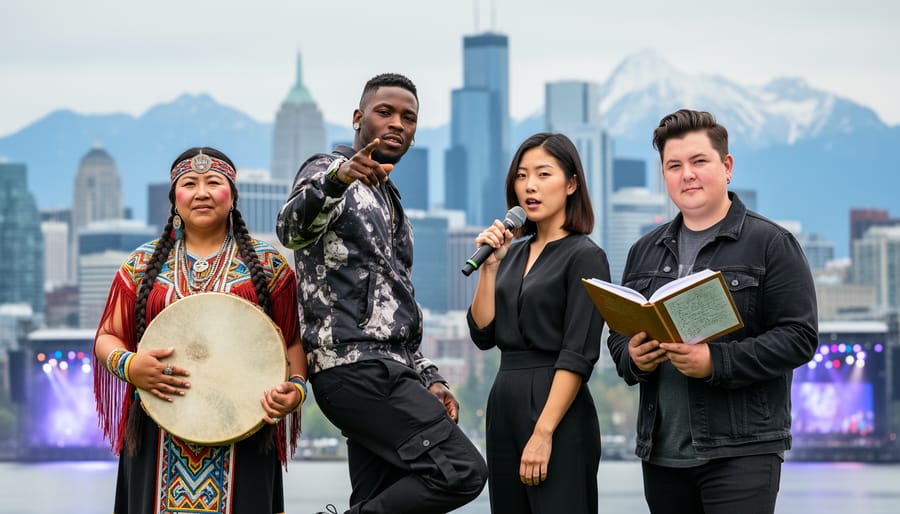
Canadian pop culture today stands at a fascinating crossroads: it reflects one of the most diverse populations in the world while still grappling with whose stories get told, funded, and celebrated. From the screens of Netflix to the stages of major music festivals, Canadian creators are increasingly bringing forward narratives that mirror the country’s multicultural reality, yet persistent gaps in representation, decision-making power, and resource allocation reveal how much work remains.
The transformation has been visible. Shows like Kim’s Convenience and Sort Of brought Asian-Canadian and trans experiences to mainstream audiences. Indigenous artists such as Buffy Sainte-Marie, Tanya Tagaq, and Jeremy Dutcher have shaped conversations about cultural sovereignty and decolonization through their work. Hip-hop, led by Toronto’s vibrant scene, has become a global export that refuses to separate Blackness from Canadian identity. These aren’t token gestures or niche successes. They represent a fundamental shift in who gets to define what Canadian culture looks and sounds like.
But celebration without critique misses the point. Funding structures still favor established gatekeepers. Rural and remote voices struggle for visibility against the gravitational pull of Toronto, Montreal, and Vancouver. Second-generation immigrant creators often find themselves boxed into telling “ethnic” stories rather than simply human ones. The tension between genuine representation and performative diversity plays out in casting decisions, writer’s rooms, and festival lineups across the country.
Understanding Canadian pop culture through a diversity lens means asking who holds power behind the scenes, whose stories get simplified or ignored, and how audiences can push for change. The next chapters of this story are being written right now, and they belong to everyone willing to engage critically and hopefully with what Canadian culture can become.
The Evolution of Representation in Canadian Entertainment
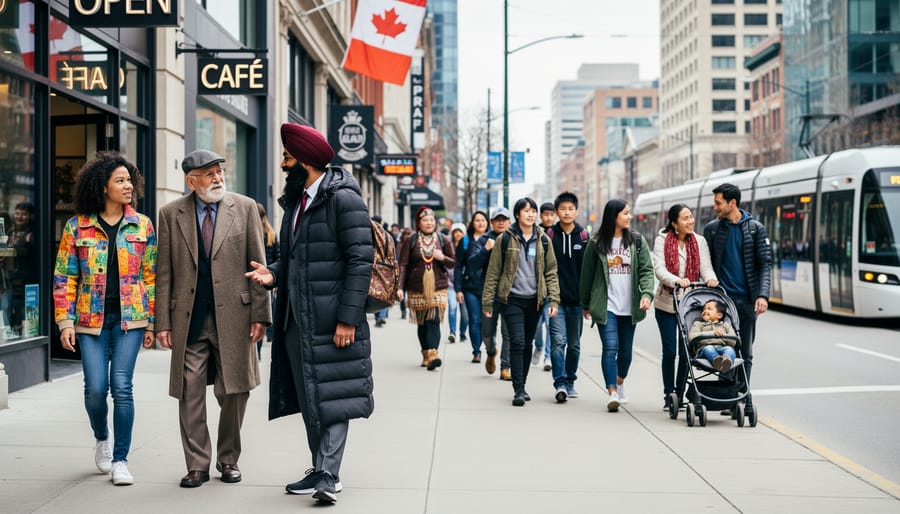
Canadian entertainment didn’t wake up one day and decide to reflect the country it serves. For decades, the industry operated on a narrow script: a handful of recognizable faces, overwhelmingly white, cycling through stories that rarely ventured beyond familiar suburbs and predictable narratives. When diversity did appear, it arrived as decoration, background characters, ethnic sidekicks, or heavy-handed “issue” storylines that treated multicultural identity as a problem to solve rather than a reality to inhabit.
The shift began not with sudden enlightenment but with persistent pressure. Throughout the 1990s and early 2000s, creators from marginalized communities worked the edges of the industry, building indie productions, securing small grants, and proving audiences existed for stories the mainstream ignored. Shows like “Da Vinci’s Inquest” started featuring Vancouver’s diverse street life not as exotic backdrop but as texture. Filmmakers like Deepa Mehta pushed against resistance to tell South Asian stories with complexity. Indigenous artists reclaimed narratives through organizations like the imagineNATIVE Film + Media Arts Festival, founded in 1999, creating space where their voices didn’t need permission.
What changed the equation was economic reality meeting cultural demand. Streaming platforms hungry for content discovered that diverse stories traveled well internationally, and that Canadian audiences, increasingly multicultural themselves, wanted to see their lives reflected. “Schitt’s Creek” normalized queer love without making it the conflict. “Kim’s Convenience” brought a Korean-Canadian family into living rooms across the country, proving that specificity resonates more than bland universality.
The conversation has moved from “Can we tell these stories?” to “Why would we tell any other kind?”
The music industry followed a parallel track. Drake’s rise didn’t just showcase one artist’s talent; it demonstrated that Toronto’s multicultural soundscape, Caribbean influences layered over hip-hop, could dominate globally. Suddenly, major labels paid attention to what was happening in Brampton, Surrey, and Montreal’s diverse neighborhoods. Artists like Jessie Reyez, Shawn Mendes, and Tanya Tagaq found mainstream platforms without erasing the cultural influences that shaped their work.
Behind the cameras, systemic changes mattered more than individual success stories. Funding bodies like Telefilm Canada and the Canada Media Fund introduced diversity requirements and accountability measures. Mentorship programs created pipelines for diverse creators to move into decision-making roles. Networks established inclusion riders and diverse writers’ rooms became industry standard rather than progressive experiment.
This evolution remains incomplete and uneven. But the direction has fundamentally shifted, from diversity as occasional exception to expectation as baseline.
Music as a Mirror: How Canadian Artists Are Redefining Sound and Identity
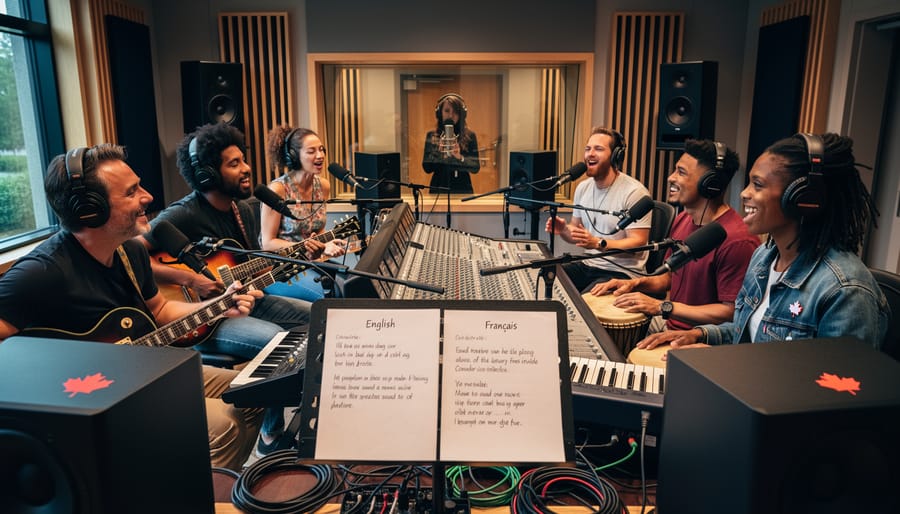
Canadian music has become a sonic laboratory where identity gets remixed, languages collide, and tradition meets experimentation. The artists reshaping the country’s soundscape are not just adding diversity to an existing template, they are fundamentally rewriting what Canadian music can be.
Hip-hop and R&B have emerged as particularly potent spaces for this transformation. Artists like Haviah Mighty, TOBi, and Shad bring Afrocentric perspectives and immigrant narratives into their lyrics, creating work that speaks directly to Black Canadian experiences while refusing to mimic American templates. The rise of black arts and culture in Canada has produced a generation of musicians who sample from their parents’ record collections, weaving Afrobeat, reggae, and Caribbean rhythms into contemporary production. This is not fusion for fusion’s sake. It is the sound of people who carry multiple cultural inheritances and choose to honor all of them.
Indigenous artists are reclaiming space in the music industry with authority. Musicians like Jeremy Dutcher, Tanya Tagaq, and Snotty Nose Rez Kids are bringing Indigenous languages, throat singing, and traditional storytelling into genres from classical to punk. Dutcher’s Polaris Prize-winning album featured archival recordings of Wolastoq songs, bridging generations through sound. These artists are not interested in being tokens or educational tools, they are creating contemporary music rooted in living cultures, challenging the colonial narrative that Indigenous art belongs in museums rather than on festival stages.
Language itself has become an instrument of identity. Quebecois hip-hop artists rap in Joual, the working-class dialect long dismissed as “bad French.” South Asian Canadian musicians blend Punjabi and English seamlessly, while Latin artists move fluidly between Spanish and English verses. This multilingual approach reflects how many Canadians actually live and think, code-switching as naturally as breathing.
The result is a musical landscape where a single artist might incorporate three languages, four genres, and five cultural traditions into one track, and it sounds authentically Canadian precisely because of that complexity. The monolithic narrative never fit this country. The music is finally catching up to that reality.
Screen Stories: Television and Film Breaking the Mold
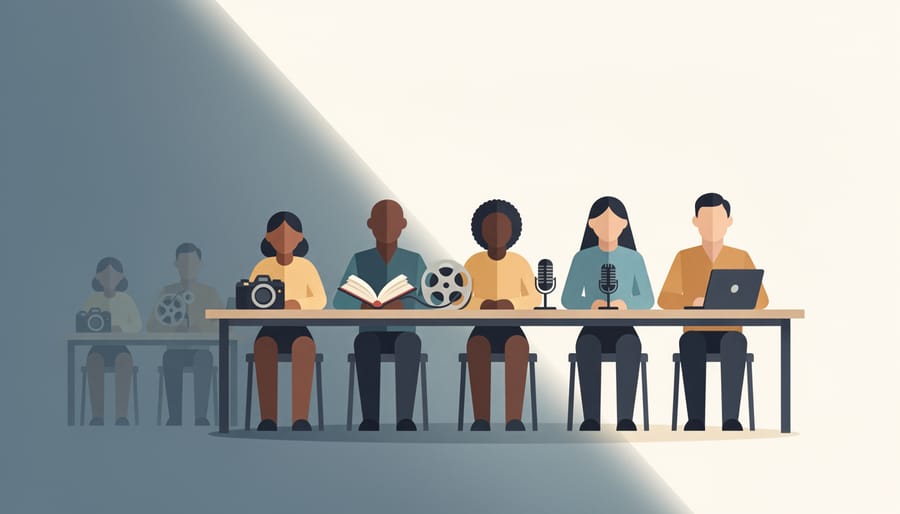
Canadian screens are no longer content with perfunctory diversity check-boxes. Shows like “Sort Of”, Bilal Baig’s semi-autobiographical series about a gender-fluid Pakistani-Canadian nanny navigating family, identity, and belonging, demonstrate how nuanced storytelling can centre experiences that were invisible a decade ago. The series doesn’t treat gender identity expression as a Very Special Episode topic; it’s simply the protagonist’s lived reality, woven into a warm, messy story about human connection.
Similarly, “Trickster” brought Cree and Métis mythology to CBC with a contemporary teen protagonist grappling with supernatural heritage and present-day struggles on a reserve. Though the show was cancelled after one season amid behind-the-scenes controversies, its ambitious vision illustrated both the hunger for Indigenous narratives and the structural challenges of sustaining them within legacy broadcasting systems.
On the film side, independent productions are frequently outpacing mainstream studios in risk-taking and depth. Deepa Mehta’s “Funny Boy” portrayed Sri Lankan-Tamil identity and queer awakening during civil war, while “Beans” examined the 1990 Oka Crisis through a Mohawk girl’s coming-of-age. These aren’t niche films for niche audiences, they’re Canadian stories that happen to revolve around experiences beyond the white, straight default, and they’re finding viewers hungry for that specificity.
Quebec’s francophone productions have their own momentum: shows like “M’entends-tu?” tackle working-class life, sexual agency, and female friendship without the polished veneer of aspirational television. The series resonated precisely because it refused to sanitize its characters’ messy, contradictory lives.
What ties these productions together isn’t just visible diversity onscreen. It’s the presence of diverse writers, directors, and producers in creative control, people who understand that immigrant families argue about more than assimilation, that LGBTQ+ lives contain joy and boredom alongside struggle, and that empowerment art emerges when marginalized creators tell stories on their own terms rather than translating their experiences for a presumed mainstream audience. Canadian screens are finally learning the difference between representation as optics and storytelling as genuine artistic risk.
Digital Spaces and the New Cultural Gatekeepers
The shift away from traditional media gatekeepers has fundamentally altered who gets to shape Canadian pop culture. When mainstream networks and record labels controlled access, diverse voices faced rejection letters that spoke volumes about what Canadian stories were deemed “marketable.” Now, a Toronto-based creator can post a video about second-generation immigrant experiences at 11 PM and wake up to 200,000 views and a community that recognizes itself in every frame.
Platforms like TikTok have become unexpected incubators for Canadian cultural conversations that legacy media overlooked. Indigenous creators share traditional knowledge through short videos that blend contemporary aesthetics with ancestral teachings, reaching audiences who never saw themselves in school curricula. Black Canadian creators dissect microaggressions specific to living in Montreal or Vancouver, building solidarity across provinces. The University of Diversity TikTok phenomenon demonstrates how educational content about identity and systemic issues can spread organically when creators control both message and distribution.
YouTube has allowed long-form exploration that traditional broadcasters deemed too niche. Canadian podcasters discussing queer South Asian experiences or navigating disability in the entertainment industry have cultivated loyal audiences that advertisers now recognize as valuable demographics. These aren’t vanity projects. They represent sustainable media businesses built without begging for a seat at someone else’s table.
Streaming services have complicated this democratization, though. While platforms like CBC Gem and Crave have greenlit more diverse Canadian projects, algorithm-driven recommendations still favour content that fits established patterns. A breakthrough show about a Sri Lankan-Canadian family might get made, but discoverability remains a challenge when the algorithm learned its preferences from decades of homogeneous programming.
The real power shift happens when digital creators convert online communities into tangible industry influence. When a Filipina-Canadian YouTuber with 500,000 subscribers partners with a major brand, or when a grassroots podcast about Indigenous futurism lands a development deal, traditional gatekeepers notice. They have not disappeared, but they are no longer the only arbiters of what qualifies as Canadian culture worth consuming. The conversation has moved to spaces where marginalized voices set the terms, and legacy institutions are scrambling to catch up.
The Complications of Cultural Authenticity and Commodification

When diverse cultures move from the margins into mainstream Canadian pop culture, the celebration often comes with complications. The line between appreciation and appropriation remains contested terrain, particularly when cultural elements are extracted from their contexts and repackaged for broader consumption. A clothing brand using Indigenous patterns without consultation or compensation represents the extractive end of this spectrum, while collaborations that center Indigenous designers and share profits equitably demonstrate what respectful engagement looks like.
The question of who profits matters enormously. When major labels sign diverse artists but retain creative control, impose “marketable” sounds, or pressure musicians to tone down cultural specificity for wider appeal, the economic benefits flow upward while the artists themselves become conduits rather than owners of their cultural expression. Similar dynamics play out in film and television, where diverse stories get greenlit but the executive producers, financiers, and ultimate decision-makers remain homogeneous, creating what some critics call “diversity theater” rather than structural change.
The risk intensifies when diversity becomes branding. Companies and cultural institutions increasingly deploy multicultural imagery in their marketing, understanding that it signals progressiveness to younger audiences. Yet this performative diversity often exists without corresponding shifts in hiring practices, funding allocation, or structural power. Checking sources like Schema’s media bias chart can help audiences evaluate whether coverage of cultural issues reflects genuine diversity or simply markets it.
The tension also surfaces around authenticity itself. Who decides what constitutes authentic representation of a culture? Communities are not monolithic, and gatekeeping authentic expression risks policing creativity and reinforcing the very boxes that marginalized artists have fought to escape. A second-generation Korean-Canadian musician blending traditional instruments with electronic music might face criticism from multiple directions, yet that fusion represents a legitimate lived experience. The goal is not cultural purity but ensuring that diverse creators have agency over their narratives and fair compensation for their contributions.
What True Inclusion Actually Looks Like Moving Forward
True inclusion in Canadian pop culture demands more than casting diverse faces or featuring multicultural storylines. It requires dismantling the structures that have historically concentrated power and resources in the hands of a narrow demographic.
Behind-the-scenes representation matters as much as what appears on screen or in playlists. When showrunners, producers, directors, composers, and executives come from diverse backgrounds, they shape narratives from conception rather than being consulted as afterthoughts. CBC’s recent commitment to Indigenous-led production teams and the growth of Black-owned production companies like Panacea Entertainment represent steps toward this structural shift. But these examples remain outliers in an industry where decision-making still skews heavily toward white gatekeepers.
Equitable funding structures must replace systems that inherently favour established networks and legacy institutions. Grants and financing programs need to account for the reality that creators from marginalized communities often lack the connections, collateral, and industry access that grease traditional funding paths. Organizations like the BIPOC TV and Film Fund have begun addressing this gap, but their budgets remain modest compared to mainstream financing mechanisms.
Sustained commitment separates genuine transformation from performative diversity. When institutions treat inclusion as a trend cycle, they create boom-and-bust patterns where diverse creators gain visibility during moments of social reckoning, then disappear when the cultural conversation shifts. Authentic commitment means maintaining funding, mentorship programs, and opportunities regardless of whether diversity is currently “trending.”
Audiences play a crucial role by supporting diverse work consistently, not just during designated heritage months. Choosing to watch, listen, share, and financially support content from underrepresented creators signals to platforms and advertisers that these stories have commercial viability beyond niche markets.
The path forward isn’t about reaching a finish line where Canadian pop culture becomes “diverse enough.” It’s about creating systems where diverse participation becomes the default, not the exception requiring justification.
The transformation of Canadian pop culture isn’t something we can mark complete and move on from. It’s a living, breathing process that requires constant attention, reflection, and action. Every time a new show gets greenlit, every time a record label signs an artist, every time funding gets allocated, these are moments where the promise of diversity either deepens or dilutes.
What makes this moment particularly powerful is that you’re not just a passive observer. The choices you make as a consumer carry weight. When you stream a film by an Indigenous director, when you buy tickets to see a multilingual artist perform, when you share content from creators telling stories that mainstream media overlooked, you’re participating in reshaping the cultural landscape. The algorithms respond. The industry notices. The market follows.
But support alone isn’t enough. Holding institutions accountable matters just as much. Call out tokenism when you see it. Question who’s in the writer’s room, who’s behind the camera, who’s making decisions at the executive level. Genuine representation extends beyond what we see on screen or hear on speakers.
Canadian pop culture today reflects more faces than it did a decade ago, and it will reflect even more a decade from now if we stay engaged. This isn’t about perfection, it’s about momentum. The work continues, and you’re already part of it simply by paying attention, making informed choices, and demanding better. That’s how culture changes: one decision, one voice, one story at a time.
You may also like
-
Gender Identity Expression: How Fashion Becomes a Language of Self in Canada
-
How to Prevent Youth Vaping: Evidence-Based Strategies That Work in 2026
-
How Black Empowerment Art Is Reshaping Our Cultural Landscape Right Now
-
The Media Bias Chart Everyone’s Talking About (And Why It Matters to You)
-
7 pH-Neutral Car Shampoo Tips Every Canadian Driver Should Know