
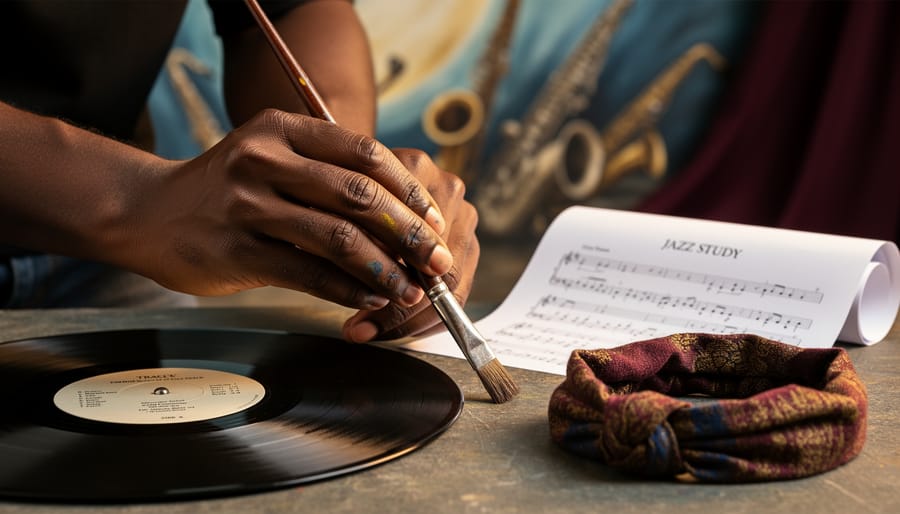
Black arts and culture represents the full spectrum of creative expression by people of African descent: visual art, music, dance, literature, theater, film, fashion, and digital media that both preserves ancestral traditions and pushes boundaries in every contemporary genre. It’s a living, evolving force that has shaped global culture while serving as a vital space for Black communities to assert identity, process collective experience, and imagine liberated futures. From the Harlem Renaissance to Afrofuturism, from jazz to hip-hop, from Basquiat to Kehinde Wiley, Black artists have consistently redefined what art can be and who it’s for.
Understanding Black arts and culture means recognizing it as more than aesthetic contribution. It’s a form of resistance, documentation, and joy-making that has survived centuries of suppression and commodification. When we engage with this work authentically, we’re not just appreciating beauty or talent. We’re acknowledging a creative tradition built under conditions of extraordinary adversity, one that refuses to be contained by mainstream narratives or colonial frameworks.
Today’s landscape is both exciting and complex. Black creators are gaining unprecedented visibility and building independent platforms, yet questions of ownership, compensation, and cultural appropriation remain urgent. Whether you’re seeking to deepen your connection to Black creative traditions, support artists directly, or simply understand why this work matters so profoundly, the path forward requires more than passive consumption. It demands active engagement, critical awareness, and a willingness to center Black voices in conversations about their own cultural production.
What Black Arts and Culture Actually Encompasses
Black arts and culture isn’t a single category you can pin down, it’s a sprawling, dynamic network of creative forms that have emerged from African diasporic experiences across continents and centuries. Think of it as a living conversation between traditions, innovations, and hybrid experiments that refuse to stay in one place or speak in one voice.
The scope spans disciplines you’d expect and plenty you might overlook:
- Visual arts: from painting and sculpture to street murals, digital art, and Afrofuturistic installations that reimagine Black futures
- Music: jazz, blues, gospel, funk, soul, reggae, hip-hop, Afrobeats, drill, amapiano, each genre born from specific conditions and evolving constantly
- Literature: novels, poetry, essays, spoken word, and speculative fiction that explore identity, history, and resistance
- Theatre and performance: from August Wilson’s plays to experimental Black theatre collectives pushing formal boundaries
- Dance: traditional African forms, ballet, modern, voguing, krumping, and fusion styles that blend technique with cultural memory
- Film and television: narrative features, documentaries, web series, and YouTube channels challenging how Black stories get told
- Fashion: haute couture, streetwear, hair as art, and design that reclaims African aesthetics while innovating new ones
- Digital media: podcasts, TikTok storytelling, memes, and online spaces where Black creators shape internet culture
What connects these forms isn’t a uniform style or message, it’s the shared project of making space for Black expression in a world that has historically denied, exploited, or distorted it. A Senegalese textile artist and a Toronto rapper crafting clever rap rhymes are both participating in this constellation, even if their methods and audiences differ completely.
The fluidity matters. Black artists borrow, blend, and break rules across disciplines and geographies. A choreographer might draw on West African dance traditions and Chicago footwork. A novelist might weave Yoruba mythology into science fiction. A fashion designer might reference 1970s Harlem and contemporary Lagos in the same collection. This refusal to be boxed in, this constant evolution, is itself a defining feature, not a bug.
Why Black Arts and Culture Matter Beyond Aesthetics
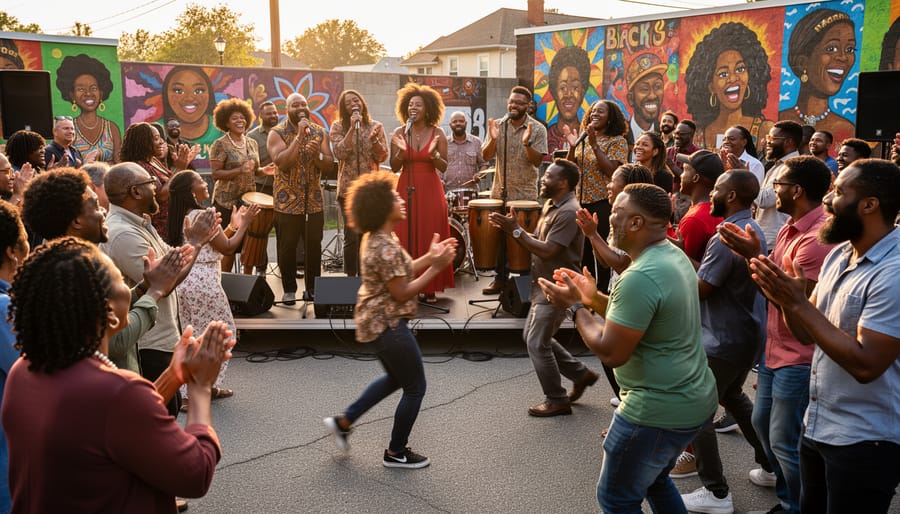
Black arts and culture function as far more than decoration or entertainment. They are technologies of survival, engines of resistance, and blueprints for futures that honor the full complexity of Black life. When Kendrick Lamar weaves Compton street narratives with jazz experimentation, or when Kehinde Wiley reimagines classical portraiture with Black subjects in positions of power, they are doing something essential: reclaiming space in cultural memory that has been violently contested for centuries.
At the most fundamental level, Black creative expression preserves what institutional histories erase. Oral traditions, music, visual art, and literature carry forward stories that textbooks omit or distort. The blues encoded experiences of migration and labor exploitation. Quilts functioned as maps and records. Graffiti and murals document neighborhood histories before gentrification wipes them clean. This preservation is active, not passive, each generation reinterprets and extends the archive through contemporary forms like digital storytelling and Afrofuturist speculative fiction.
Resistance operates on multiple registers. Art counters stereotypes by insisting on nuance, complexity, and beauty where dominant narratives offer only trauma or threat. It refuses erasure by taking up physical and digital space boldly. Protests gain momentum through music, chants, and visual symbols that crystallize demands and galvanize communities. This resistance isn’t always confrontational, sometimes it’s simply the radical act of depicting Black joy, rest, and ordinary life as worthy of artistic attention.
Black arts and culture also affirm identity in a world that constantly questions Black humanity. Seeing yourself reflected authentically in film, reading your dialect treated as legitimate literary language, hearing your grandmother’s church rhythms in a chart-topping album, these moments validate experiences and cultivate belonging. They tell young Black people that they are part of a continuum, not aberrations.
Economically, cultural production creates pathways to wealth and self-determination. Hip-hop evolved from park jams to a multi-billion-dollar industry. Independent Black designers, filmmakers, and gallerists build enterprises on their own terms, circulating resources within communities and mentoring the next wave.
Finally, Black cultural innovation shapes global aesthetics relentlessly. Jazz, rock and roll, hip-hop, voguing, Afrobeats, forms created by Black artists become the lingua franca of popular culture worldwide. This influence is both testament to creative genius and reminder of ongoing appropriation battles. The engine keeps running, generating new forms even as others profit from the fuel.
Historical Roots and Movements That Shaped Today
Understanding Black arts and culture today requires looking back at the movements that refused to let creativity be silenced. These weren’t just aesthetic shifts, they were responses to specific political moments, each one carving out space for Black people to define themselves on their own terms.
The Harlem Renaissance of the 1920s emerged during the Great Migration, when Black Americans moved north seeking better opportunities. Writers like Langston Hughes and Zora Neale Hurston, visual artists like Aaron Douglas, and musicians bringing jazz to life created work that celebrated Black life’s complexity and beauty. They proved that Black culture wasn’t a footnote to American culture, it was essential to it. You can trace a direct line from their insistence on sophisticated, multifaceted portrayals to today’s demand for authentic representation in film and television.
The Black Arts Movement of the 1960s and early ’70s took a more confrontational approach, born from the civil rights and Black Power movements. Artists like Amiri Baraka, Nikki Giovanni, and the collective AfriCOBRA declared that art must serve the liberation struggle directly. They established independent theaters, publishing houses, and galleries that didn’t wait for white institutional approval. This DIY ethos, create your own platforms when existing ones shut you out, is the blueprint for today’s independent Black media companies and digital content creators.
Afrofuturism, crystallized through musicians like Sun Ra and writers like Octavia Butler, imagined Black futures beyond oppression’s constraints. It merged African diasporic culture with science fiction and technology, asking what liberation could look like if we weren’t bound by current limitations. You see its influence everywhere in 2026: in Janelle Monáe’s visual albums, in speculative fiction by N.K. Jemisin, in fashion that blends traditional African aesthetics with futuristic design.
Hip-hop culture, emerging from the Bronx in the 1970s, became perhaps the most globally influential artistic movement of the late twentieth century. It transformed how music is made, how stories are told, and how marginalized communities claim visibility. From graffiti to breakdancing to rap, it demonstrated how innovation flourishes under constraint, and how cultural expression can become economic power.
Each movement built on what came before while speaking to its moment. They share common threads: self-determination, community accountability, and the refusal to accept narrow definitions of what Black art could be.
Black Arts and Cultural Empowerment in Practice Today
Reclaiming Narratives and Challenging Stereotypes
Black creators are actively dismantling stereotypes by producing work that showcases the full spectrum of Black life, joy, complexity, vulnerability, ambition, and contradiction. Films like Moonlight and The Last Black Man in San Francisco reject monolithic narratives, presenting layered characters whose Blackness is essential but not their only defining trait. In literature, authors such as Brit Bennett and Colson Whitehead explore identity, trauma, and resilience without flattening their subjects into trauma porn or respectability narratives.
Theatre companies like The New Black Fest platform experimental works that challenge what “Black stories” are allowed to be, while media platforms like TikTok enable creators to bypass traditional gatekeepers entirely, crafting their own counter-narratives in real time. Documentaries such as 13th and Summer of Soul reclaim historical truth obscured by dominant culture. These projects don’t just correct the record, they expand it, insisting that Black experiences are too varied for any single frame to contain.
Building Economic Power and Sustainability
Black-owned enterprises are translating artistic vision into economic leverage. Independent galleries in cities like Toronto, Atlanta, and London now showcase and sell work outside traditional gatekeepers, keeping profits within Black communities. Record labels such as Top Dawg Entertainment and Griselda Records retain creative control and revenue shares that major-label deals historically denied. Publishing houses like Amistad and One World champion Black authors while building sustainable imprints that outlast trend cycles.
Streaming platforms and digital channels have democratized access further. Artists distribute music directly to fans, visual creators monetize on Patreon, and filmmakers crowdfund projects that studios ignore. Fashion brands, from streetwear labels to haute couture, merge aesthetics with cultural storytelling building seven-figure enterprises rooted in Black identity.
Yet structural barriers persist. Access to capital remains unequal, venture funding for Black founders lags far behind white counterparts, and loans come with higher interest rates. Gallery representation skews heavily toward white artists; auction houses undervalue Black work. Commercial success can demand compromise, while staying independent means limited reach and resources. Real economic power requires not just individual hustle, but systemic change in who controls funding, distribution, and valuation.
Fostering Community and Healing
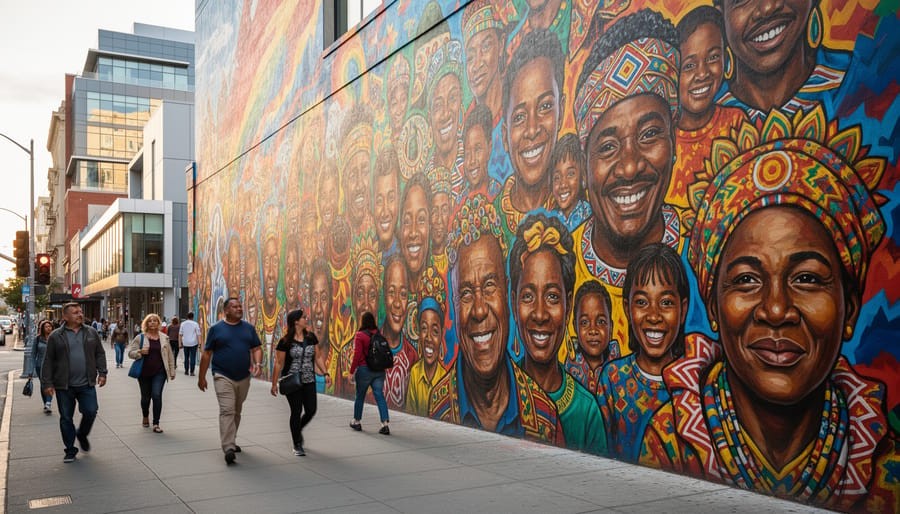
Art doesn’t just hang on walls or live in studios, it gathers people. Public murals transform neglected neighborhoods into open-air galleries where residents see their histories reflected back. Poetry slams turn coffee shops and community centers into arenas for truth-telling and catharsis. Community theatre groups stage productions that wrestle with trauma, celebrate survival, and invite audiences into shared emotional experience.
Dance circles, drum sessions, and cultural festivals function as ritual spaces where Black communities process grief, affirm joy, and strengthen bonds across generations. These practices create containers for collective healing, addressing historical wounds while nurturing present-day connection. In cities worldwide, Black-led cultural events serve as anchors: places where people can exhale, be fully themselves, and remember they’re part of something larger than individual struggle. The art becomes the gathering point, and the gathering becomes the healing.
Challenges and Tensions Within the Movement
The vibrancy of Black arts and culture doesn’t erase the structural realities that constrain it. Underfunding remains pervasive. Major institutions still allocate disproportionately small budgets to Black artists and cultural programs, forcing many to rely on grants that demand exhausting proof of “community impact” while white-led projects receive funding for experimentation alone. Independent Black galleries, theatres, and publishing houses operate on shoestring resources, and mainstream media coverage, despite what you might see on a media bias chart tracking outlets, often overlooks them entirely unless a work goes viral or fits a palatable narrative.
Tokenism complicates visibility. Institutions invite one Black artist to represent an entire diaspora, checking a diversity box without addressing systemic exclusion. This creates pressure on individual creators to speak for millions and breeds resentment when opportunities feel conditional on performing a particular kind of Blackness. Gatekeeping also occurs within Black communities: debates over who gets to define authenticity, whether diasporic or continental African perspectives take precedence, and whether commercial success dilutes political integrity.
Cultural appropriation drains energy and profit. Non-Black creators lift aesthetics, language, and techniques from Black cultural production, reaping acclaim and revenue while the originators remain marginalized. This isn’t new, but digital platforms accelerate the cycle, and distinguishing appreciation from extraction requires the kind of critical media literacy you’d apply when you read the chart of any information source.
The tension between grassroots integrity and commercial viability stirs ongoing friction. Artists who achieve mainstream success face scrutiny: Did they compromise? Are they still accountable to the community? Meanwhile, those who refuse commercial pathways struggle for sustainability. Neither path is inherently pure or corrupt, but the question of whom art serves, and who profits, remains unresolved and necessary.
How to Engage With and Support Black Arts and Culture
Engaging with Black arts and culture meaningfully starts with a shift in mindset: approach it as a learner, not a savior, and prioritize direct support over symbolic gestures. The goal is authentic participation, not performative allyship.
Begin by showing up. Attend exhibitions at Black-owned galleries, performances at community theatres, poetry slams, film screenings, and cultural festivals. These events create revenue, build audience, and signal demand to institutions that too often overlook Black creators. When you attend, be present and respectful, listen more than you speak, especially in spaces created by and for Black communities.
Support translates most directly through economic choices. Buy work directly from Black artists rather than through third-party retailers when possible. Subscribe to independent Black-run magazines, streaming platforms, and Patreon accounts. Purchase books from Black-owned bookstores or directly from authors. Follow and share the work of Black curators, critics, and cultural commentators on social media, amplifying their voices without centering your own commentary.
- Attend Black-led cultural events, exhibitions, and performances in your area
- Purchase art, books, music, and fashion directly from Black creators and Black-owned businesses
- Follow and amplify Black artists, critics, and cultural workers on social media
- Donate to or become a member of Black arts organizations and community cultural centers
- Educate yourself about cultural context and history before engaging publicly
- Advocate for equitable funding and institutional support in your own networks
Education matters as much as dollars. Learn the history and context behind forms you engage with, understanding why a piece exists deepens appreciation and prevents appropriation. Read Black critics and scholars, not just white gatekeepers writing about Black culture. If you are non-Black, recognize that some spaces are not for you, and that boundary is healthy, not exclusionary.
Finally, use whatever influence you have. If you sit on a board, curate a playlist, teach a class, or control a budget, advocate for Black artists and equitable representation. Real support requires changing systems, not just individual transactions.
Common Questions About Black Arts and Culture
Is Black art always political?
Not inherently. While Black art often engages with identity, resistance, and social realities because those experiences are inseparable from many Black lives, it’s equally about beauty, joy, experimentation, and the full range of human emotion. Reducing it to only political expression flattens its complexity and denies Black artists the freedom to create without constant justification.
Can non-Black people appreciate or critique Black art?
Absolutely, appreciation rooted in genuine curiosity and respect is welcome. When offering critique, approach with humility and cultural awareness, recognizing that some context may lie outside your lived experience. Listen more than you speak, especially in spaces centered on Black voices, and avoid positioning yourself as an authority on work that doesn’t reflect your reality.
How do I know if I’m appropriating versus appreciating?
Appreciation involves learning, crediting sources, and engaging respectfully without claiming ownership or erasing origins. Appropriation extracts elements for profit or aesthetic without acknowledgment, often while the originators face marginalization. Ask yourself: Am I learning the history? Am I supporting Black creators? Am I perpetuating harm or erasure?
What’s the difference between Black arts and African art?
African art refers to creative work originating from the African continent, with immense diversity across 54 countries and thousands of cultures. Black arts encompasses the broader African diaspora, including African American, Afro-Caribbean, Afro-Latinx, and Black European traditions, shaped by migration, colonialism, and hybrid influences. There’s overlap and exchange, but they’re not interchangeable terms.
These questions surface regularly because Black arts and culture challenges people to think beyond passive consumption. Finding Black artists and cultural events near you starts with intentional searching: follow local Black-owned galleries, check community calendars at cultural centers, explore social media hashtags tied to your city, and ask friends already engaged in these spaces for recommendations. Many cities host annual festivals, monthly art walks, or pop-up markets specifically spotlighting Black creators. Online platforms and streaming services also curate Black arts content, though nothing replaces the energy of live, in-person connection. The effort to seek out these spaces, rather than waiting for them to come to you, signals genuine interest and respect for the work being done.
Black arts and culture will continue to evolve, challenge, and inspire long after you finish reading this. It’s not a museum exhibit to observe from a distance, it’s a living conversation that invites your participation, your curiosity, and your commitment to showing up authentically.
The artists, writers, musicians, and cultural workers shaping this landscape aren’t asking for passive admiration. They’re building something bigger: spaces where identity is celebrated, where resistance takes creative form, where joy becomes an act of defiance against erasure. Your role in this ecosystem matters, whether you’re creating, supporting, learning, or simply listening with intention.
Start somewhere. Attend that gallery opening. Buy that book. Share that artist’s work. Question your assumptions. Celebrate the complexity and refuse the easy narratives. Black arts and culture thrive when we move beyond performative gestures toward genuine engagement, when we recognize that cultural equity benefits everyone.
The work is ongoing. The invitation is open. What you do next shapes what comes after, and that’s where the real power lies.