

Yes, Americans can teach in Canada, and plenty do. The path runs through the province or territory where you want to work, because Canada has no single national teaching license. Each one sets its own rules, so your first move is picking a place, then applying to its teacher certification body with your transcripts, proof of your teacher education program, and any required background checks. Work authorization is a separate track, and it usually takes the most planning. Give yourself several months, not several weeks, and expect paperwork to be the hardest part rather than the teaching itself.
The classroom side is worth thinking about early, too. Canadian schools tend to emphasize inclusion, Indigenous perspectives, and multilingual learners in ways that may feel familiar or may surprise you, depending on where you trained. Many American teachers describe the adjustment as less about starting over and more about learning a new set of shared priorities. That’s a real opportunity, especially if you’re curious about how Canadian educators approach innovation, collaboration, and student wellbeing. Below, we break down licensing, certification steps, work authorization basics, and what daily life in a Canadian school can look like, so you can decide whether the move fits your goals.
Why So Many American Educators Are Looking North

What Canadian Classrooms Are Known For
Walk into a Canadian school and one of the first things you may notice is how many backgrounds share the room. Because Canada welcomes newcomers from around the world, many classrooms bring together students with different languages, faiths, family structures, and cultural traditions. Teachers are often expected to build an inclusive classroom where every student sees themselves reflected in the stories, examples, and conversations of the day.
Student well-being tends to get real attention, too. Many schools weave social-emotional learning, mental health awareness, and supports for students with diverse learning needs into everyday teaching rather than treating them as add-ons. The idea is simple: students learn better when they feel safe, seen, and supported.
Another defining feature is the growing place of Indigenous perspectives in the curriculum. In response to the Truth and Reconciliation Commission’s calls to action, many provinces and school boards are working to bring Indigenous histories, knowledge, and ways of learning into lessons across subjects. Some teachers collaborate with local Elders and community members, and some schools explore land-based learning.
It’s worth keeping this in perspective. Canada has no single national curriculum, so what you’ll see in a Vancouver classroom may look quite different from one in rural Nova Scotia or northern Quebec. Funding, resources, and the depth of implementation also vary from one school board to the next. Think of these features as common threads, not guarantees.
Education Is Provincial: Understanding Who Decides Whether You Can Teach
Here’s the thing that trips up almost every American who starts researching this move: Canada doesn’t have a national teaching licence. None. Education is a provincial and territorial responsibility, so each of the ten provinces and three territories sets its own rules for who can teach, what they teach, and how students are assessed.
If you’re from the U.S., this should feel oddly familiar. Teaching licences there are issued state by state, and a certificate from Texas doesn’t automatically carry over to Oregon. Canada works the same way, just with different names on the door. Think of each province as its own “state” with its own certification office and its own curriculum.
That also means there’s no single application to submit. You pick a province (or a few), find its regulator, and follow its process. Here are some examples of how that looks:
| Province | Regulating body | How foreign-trained applicants are treated |
|---|---|---|
| Ontario | Ontario College of Teachers | Applications from teachers certified outside Ontario are assessed against provincial standards |
| British Columbia | Teacher Regulation Branch (with the BC Teachers’ Council setting standards) | Credentials earned elsewhere are reviewed against BC requirements |
| Alberta | Alberta Education (Teacher Certification) | Applications from outside Alberta are evaluated individually |
| Nova Scotia | Department of Education and Early Childhood Development | Out-of-province and international credentials are assessed case by case |
A quick caution: names, processes, and expectations change, so treat this table as a starting map rather than the final word. Always confirm the details directly with the regulator in the province you’re interested in. A province’s choices also shape your day-to-day work, from the curriculum you’ll teach to the supports available in your school.
Getting Certified: The Step-by-Step Path for U.S.-Trained Teachers

What If Your Credentials Don’t Match Up Perfectly?
Plenty of American teachers find their paperwork lands somewhere in the middle: close, but not a perfect match. That’s normal, and it rarely ends the process.
One common scenario is a U.S. teaching degree that falls a little short of what a province expects. A regulator might ask for bridging coursework, such as a course in Canadian curriculum, Indigenous education, or inclusive classroom practice. Think of it as a short top-up rather than starting over, and many programs are designed for working or newly arrived teachers.
Subject-specific gaps are another one. You might be certified in broad-field social studies, while a Canadian school board wants specific coursework in history or geography. Or your science credits may not line up neatly with the subjects you’d teach. The regulator will usually spell out which credits are missing, so you can fill them in strategically instead of guessing.
Then there’s the distinction that trips people up: being certified isn’t the same as being hired. Certification says you’re qualified to teach. A job offer depends on the school board, local demand, and often a separate application process, so it helps to pursue both at once.
If something doesn’t line up, ask the regulator what a realistic path looks like. Most would rather help you close the gap than turn you away.
Work Authorization and Immigration: Can You Legally Work in a Canadian School?
Here’s where many Americans get tripped up: being certified to teach and being allowed to work in Canada are two separate questions, answered by two different authorities. A provincial regulator decides whether you can hold a teaching certificate. The federal immigration system decides whether you can legally take a paycheque in the country. You need both, and the timing matters.
Most Americans start with an employer-supported work permit. In many cases, a school board or private school has to show it has hired you for a specific role, and the permit is tied to that job. This is common for temporary positions, and it often involves the employer going through extra steps before you can apply.
Then there’s CUSMA, the trade agreement that replaced NAFTA. It includes a professional category that lets citizens of the United States, Canada and Mexico work in Canada in certain listed occupations. Here’s the catch: teaching has historically been treated differently from many other professions on that list, with conditions that don’t apply to, say, an engineer or an accountant. Whether a particular teaching role fits can depend on the level, the type of institution, and how the role is defined. Don’t assume the professional route will cover you just because you’ve heard it works for friends in other fields.
If you want to stay long term, there are also permanent residence pathways. Some are points-based and weigh things like age, education, language ability and work experience. Others are run by individual provinces, which sometimes prioritize educators or other in-demand workers. A job in a Canadian school can sometimes strengthen an application down the road, but the details change, so check before you plan around any single route.
A practical habit worth building early: keep a simple timeline that tracks both tracks side by side. If a job offer depends on certification, or a permit depends on a job offer, knowing which piece unlocks the next will save you real stress. Official Canadian government websites are the best place to confirm what applies to you, and a regulated immigration consultant or lawyer can help if your situation has any wrinkles.
What Changes When You Step Into a Canadian Classroom

The first thing many American teachers notice is how much the day-to-day rhythm shifts. Curriculum is set provincially, so what you teach in Ontario can look quite different from what’s expected in British Columbia or Nova Scotia. Expect to spend your first few months learning your province’s outcomes and frameworks, much like learning a new state’s standards, only with a different philosophy underneath.
Assessment is another adjustment. Large-scale standardized testing exists in Canada, but it tends to be lighter and more targeted than the high-stakes culture many U.S. educators know. Provinces typically test at a few key grade levels rather than every year, and classroom-based assessment, such as portfolios, conferences, and ongoing feedback, carries real weight. Many teachers find this gives them more room to respond to individual students, though the details vary by province and school board.
Language matters too. Canada is officially bilingual, and French shows up in different ways depending on where you are: core French classes, French immersion programs, or fully French-language schools. You don’t need to be fluent to teach in most English-language schools, but some French can open doors, and it’s worth knowing that immersion programs often have strong demand for qualified teachers.
Then there’s the culture of the school itself. Classrooms are often shaped by newcomers, multilingual families, and strong community ties, and well-being is treated as part of learning, not an extra. You’ll likely encounter education innovation in practice, from student-centred learning approaches to inclusive classroom design that plans for different needs from the start. Indigenous knowledge and perspectives are also increasingly woven into curriculum, reflecting a broader commitment to truth and reconciliation.
Keep in mind that none of this looks identical everywhere. Practice differs widely between provinces, boards, and even neighbouring schools, so stay curious, ask colleagues questions, and expect to keep learning.
Finding Your Place: Community, Inclusion, and Support as a Newcomer
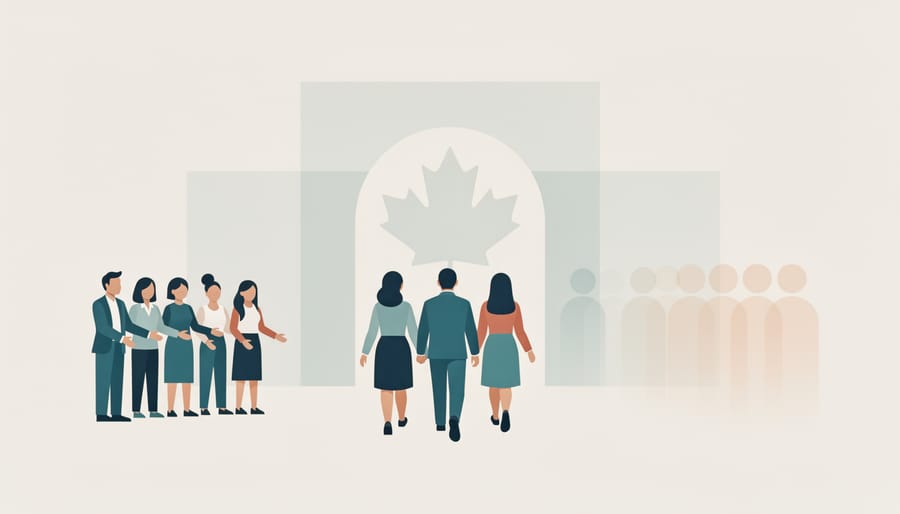
Moving countries for work isn’t only a paperwork exercise. It’s also about finding people who make a new place feel like yours, and that can take longer than getting certified.
Start with the professional layer. Most provinces have a teachers’ federation or union, and joining one often comes with the job. These organizations offer workshops, mentorship, and a ready-made network of colleagues who’ve seen newcomers come and go. Subject associations and French-language teaching groups are also worth exploring, especially if you want to build skills specific to your classroom. Many school boards run their own onboarding for new hires, which can be a lifeline in your first term.
Beyond work, settlement agencies in most cities offer free or low-cost support, from navigating healthcare to meeting neighbours. Community centres, faith groups, and hobby clubs can fill in the rest.
Experiences vary a lot depending on where you land. A large city like Toronto or Vancouver may feel very different from a small prairie town or a northern community, and individual schools set their own tone. Educators from racialized communities, immigrant families, and the queer community often bring valuable perspectives, and some also face particular challenges as they settle in. For LGBTQ+ teachers, Canada has strong legal protections, but day-to-day comfort still depends on the school and the region. If you’re curious about how conversations around identity and expression show up in everyday Canadian life, this look at LGBTQ+ inclusion offers useful context.
Be patient with yourself. Belonging builds slowly, one conversation at a time.
Your Questions About Teaching in Canada as an American, Answered
Here are quick answers to the questions American teachers ask most.
Do I need a Canadian degree to teach in Canada?
Not necessarily. Provincial regulators assess U.S. degrees and teacher-preparation programs for equivalency, and some may ask for bridging coursework if there are gaps.
Can I teach in more than one province?
Certification is provincial or territorial, so you’ll generally need to apply to each regulator separately. Some provinces have mobility provisions that can make a second application easier.
Do I need to speak French?
It depends on where and what you teach. French is essential in Quebec and for French immersion or francophone school boards, but many English-language positions elsewhere don’t require it.
How long does certification take?
Timelines vary by province and by how quickly your transcripts and records arrive, so apply early and confirm current processing times with the regulator.
Whatever you read online, treat it as a starting point. Requirements, fees, and processing times change, so confirm everything with your chosen province’s certification body and official immigration sources. It also helps to sharpen your media literacy as you research, since forum posts and recruiter pages can be outdated or oversimplified. A quick email to the regulator often saves weeks of guesswork.
Moving to teach in Canada comes down to two things: paperwork and adaptation. You’ll gather transcripts, wait on assessments, sort out work authorization, and probably learn a few new acronyms along the way. It can feel slow, and it helps to remember that every educator who got there went through the same steps.
But the process is only the doorway. On the other side is a school system that’s actively rethinking how teaching and learning can work, from inclusive classrooms to student-centred approaches to the ongoing work of weaving Indigenous knowledge into what kids learn. It isn’t perfect, and it looks different from one province to the next, but it’s curious and still evolving.
If you’re seriously considering it, start small. Pick the province or territory that interests you and read through its teacher regulator’s requirements before anything else. That one step will make the rest feel manageable.
And if you’ve already made the move, or you’re partway through, we’d love to hear how it’s going. What surprised you? What would you tell the next teacher heading north?
You may also like
-
Media Canada News Update: What Changed and What to Watch in 2026
-
U Gender Meaning: What It Is and How Fashion Reflects Non-Binary Identity in Canada
-
When to Enjoy Canada’s Best Leisure Activities: A Seasonal Guide
-
What Is Education Innovation in Canada (and How Is It Reshaping Teaching)?
-
How Canada’s Pop Culture Finally Reflects the Faces of a Nation